فارسی
فارسی  العربية
  Русский
  Azərbaycan
At Avangard Group, with years of hands-on experience in the foundry industry—both as a production and workshop unit)Foundry Workshop(, and in the fields of consulting and marketing—we have developed valuable insights that can help you establish an efficient and profitable foundry. Our practical expertise provides you with a clear roadmap for managing and growing your business successfully.
You may wonder why we choose to share our experiences through articles. The answer is simple: we strongly believe in promoting entrepreneurship and revitalizing economic growth, especially within the industrial and manufacturing sectors. That’s why we dedicate our technical knowledge and professional experience to those who aim to make a meaningful contribution to the country’s industrial development—helping remove stagnation and production barriers from the industry.
Before getting started, if you are not yet familiar with the foundry profession and its income potential, we recommend that you first enhance your knowledge in this field. Launching a workshop without a thorough understanding of its operational aspects can involve significant risks. Studying specialized resources and related articles—such as “What Is Foundry?” and materials on income and career opportunities in casting—is an excellent first step toward building a clear path to success and establishing a sustainable foundry business.
Step One: Understanding the Structure of a Foundry Workshop
For any successful investment, the first step is to fully understand the key concepts of that field. In the foundry industry, a workshop is a production unit primarily focused on manufacturing metallic and alloy components. Therefore, to establish a successful foundry, it is essential to understand its different operational sections. Generally, a foundry workshop can be divided into four main parts: Input, Production, Quality Control, and Output.
Input Section of the Foundry Workshop
The input section includes all raw materials and equipment required to sustain production operations. Foundry workshops must have a well-structured and precise plan for sourcing raw materials. At this stage, the investor should select the type of metal or alloy to be used for casting, based on the investment goals, available budget, access to suitable equipment, and the target market.
It is also essential to determine which industrial sectors the cast products are intended for—such as Oil and Gas Industries, petrochemical, mining, crushing and screening, road construction, or other industrial applications.
Production Section of the Foundry Workshop
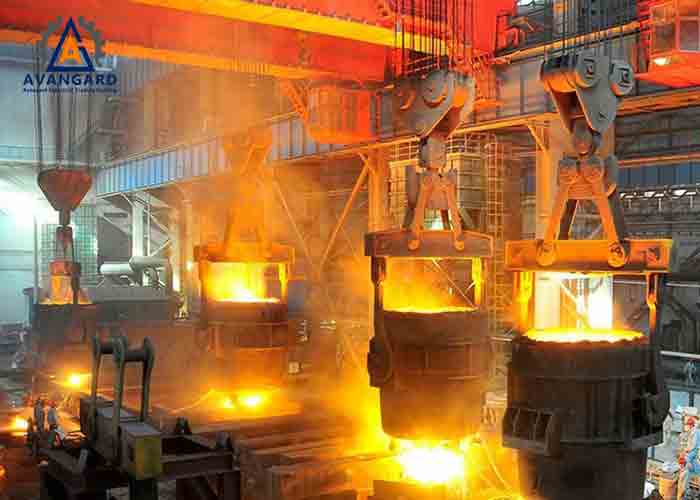
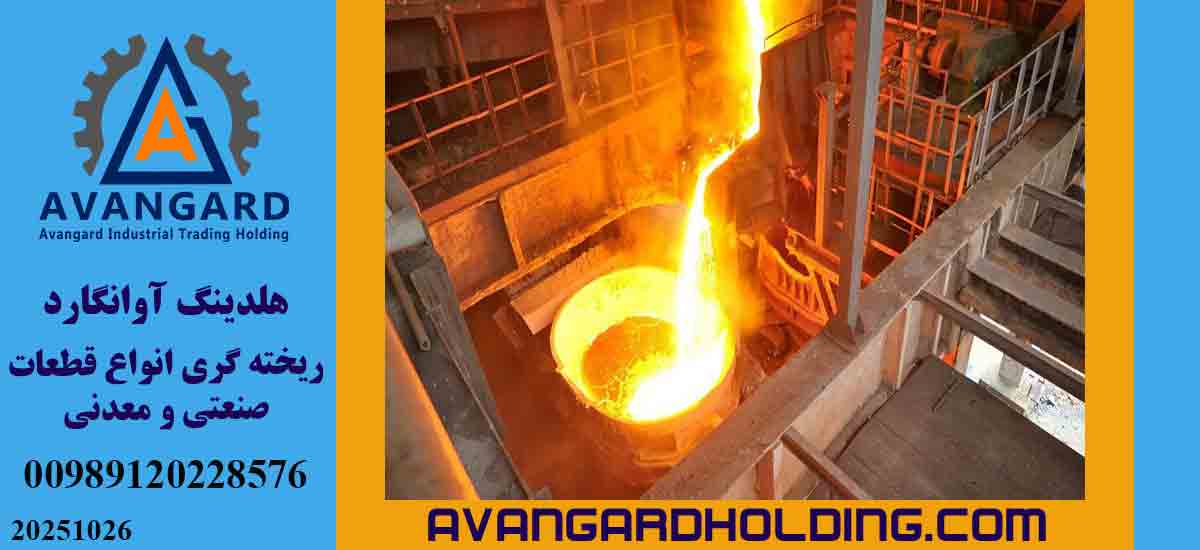
The main function of this section involves melting metal ingots and alloy scraps, preparing the molten material, casting into molds, and performing the final finishing processes. The quality of equipment used in each stage plays a crucial role in determining the overall product quality. Essential equipment includes high-temperature furnaces, casting ladles, and metal molds, all of which are vital for efficient and precise production.
When selecting equipment, both investment objectives and technical standards must be carefully considered. Having an experienced and specialized team, such as Avangard Group, can significantly enhance the process of equipment selection and ensure the consistent quality of produced components.
Quality Control Section
After production, the Quality Control (QC) department is responsible for evaluating the final properties of the cast parts and verifying their compliance with customer requirements. Experts use precision instruments and international standards to assess the mechanical characteristics of each component. Only the parts that meet all defined quality criteria are approved for delivery.
The extensive experience and technical expertise of Avangard Group in establishing professional quality control units can greatly assist investors in building an optimized and reliable QC system for their foundry operations.
Step Two: Market Analysis and Understanding the Demand for Cast Products
A clear understanding of the target market is the foundation of any successful investment in the foundry industry. The higher the market demand for a specific product, the greater its final value and profitability. Therefore, the selection of components—in terms of their material, weight, geometry, and application—must align with the actual needs of the target market.
One of the largest and most dynamic markets for cast components is the transportation industry, which includes automotive manufacturing, rail transport, and marine industries. Each of these sectors has distinct requirements in terms of part size, dimensions, and materials. For example, a limited and long-term investment in the automotive industry can generate steady but moderate returns, whereas large-scale investments in the railway or marine sectors can yield higher but shorter-term profits.
Success at this stage depends on having a deep understanding of market behavior and customer needs. With its extensive experience in various industrial sectors and successful collaborations with the oil, gas, petrochemical, mining, and road construction industries, Avangard Group provides valuable guidance for investors aiming to achieve sustainable success in the casting business.
Step Three: Effective Customer Communication Strategies
One of the key pillars in establishing a successful foundry workshop is the ability to understand and communicate effectively with industrial clients. Strong and consistent communication is the best way to identify client needs and expectations—and it defines the major difference between successful businesses and their competitors.
Before launching operations, it is essential to plan and evaluate various customer engagement strategies, ensuring that every interaction fosters trust, satisfaction, and long-term collaboration. Building and maintaining these professional relationships forms the foundation for a stable and reputable industrial brand within the casting and manufacturing sectors.
Understanding Customer Expectations Before Establishing a Foundry Workshop
The type of customers served by foundry workshops is relatively limited, as it largely depends on the nature of the industrial products being manufactured. However, the key to building a successful foundry lies in understanding customer expectations in depth.
For example, a large industrial plant typically demands high-quality products and short delivery times, while a small workshop or local business may only expect components of acceptable quality within a reasonable budget.
Therefore, before launching your operations, it is essential to determine whether your goal is to establish a small-scale workshop or a large industrial production unit. To make this decision effectively, identifying potential clients and analyzing their specific needs is crucial.
Consulting with experienced engineers and foundry specialists can give you a significant competitive advantage. With its extensive expertise, Avangard Group enables precise identification and understanding of the needs and expectations of potential customers across various industrial sectors—helping new foundry workshops align their operations with market demand from the very beginning.
The Importance of Digital Marketing in Foundry Business Success
In today’s digital era, online marketing has become one of the most powerful tools for connecting with customers and expanding business opportunities. For anyone looking to establish a foundry workshop, paying close attention to digital marketing and online presence is essential. Many businesses lose valuable opportunities simply because they are unfamiliar with digital marketing strategies.
There are various methods to attract audiences in the online space—all with the shared goal of increasing visibility and introducing your workshop to a wider industrial network.
Avangard Group, as a specialized platform for industrial and foundry casting orders, provides a direct and reliable communication channel between clients and verified professional workshops evaluated by Avangard’s engineering and technical team.
Through this platform, clients can source high-quality industrial components in the shortest possible time, ensuring reliability, precision, and professional service at every stage of the process.
Equipment and Cost Estimation for Establishing a Foundry Workshop
One of the most critical stages in setting up a foundry workshop is the selection of suitable equipment and the accurate estimation of related costs. Having a complete and well-organized list of required machinery and tools allows you to carry out financial and operational planning efficiently and systematically.
Main Equipment Required for a Foundry Workshop
The essential equipment typically includes:
- Melting furnaces, such as induction furnaces, electric arc furnaces, or high-temperature furnaces
- Casting molds
- Ladles for molten metal handling
- Cooling and quality control systems
In addition to these, supporting equipment such as material handling machinery, mold separation devices, and finishing and surface treatment machines are also vital for smooth and efficient production operations.
Cost Estimation
The total cost of establishing a foundry depends on several key factors, including:
- The type of metal or alloy to be produced
- The production capacity
- The level of automation
- The quality and specifications of the selected equipment
These costs can generally be divided into two main categories:
- Capital Expenditures (CapEx): Includes the purchase, installation, and commissioning of all machinery and equipment.
- Operating Expenses (OpEx): Covers ongoing costs such as energy consumption, raw materials, labor, and maintenance.
Proper and detailed financial planning for both categories helps prevent early-stage financial challenges and ensures the long-term sustainability and profitability of the workshop.
Modern Foundry Technologies and the Role of Avangard Group
The foundry industry has witnessed significant advancements in recent years. Today, by integrating modern casting technologies and automated systems, manufacturers can achieve exceptionally high-quality components with improved precision and efficiency.
To reach these quality standards, it is essential to have a comprehensive understanding of the casting process and to select equipment that matches the production goals and technical requirements.
If preparing a complete and accurate list of required equipment seems challenging, the Avangard Group—with its specialized engineering team and extensive experience in the foundry industry—is ready to provide professional consulting services for equipment selection, cost management, and workshop setup.
| Step | Section | Description | Required Equipment / Tools | Key Notes |
| 1 | Workshop Understanding | Familiarization with the structure and sections of a foundry workshop | – | Divide the workshop into four main areas: Input, Production, Quality Control, and Output |
| 2 | Input Section | Procurement of raw materials and alloy selection | Metallic and alloy raw materials, supply mechanisms | Determine the target industrial sector and product type; plan inventory management |
| 3 | Production Section | Melting, casting, and final finishing of components | Melting furnaces, molds, ladles, finishing machinery | Select equipment based on investment goals and desired product quality |
| 4 | Quality Control | Testing mechanical and physical properties of components | Precision measuring tools, international quality standards | Verify component properties against customer requirements |
| 5 | Market Analysis | Analyzing market demand and selecting suitable products | – | Choose the target market based on investment scale and industry type (automotive, rail, marine, etc.) |
| 6 | Customer Relations | Establishing effective communication and identifying client needs | CRM systems, digital tools, consultation services | Understand expectations of both large and small clients; seek expert consultation |
| 7 | Marketing & Advertising | Promoting the workshop in digital spaces | Website, social media platforms, online B2B platforms | Maximize visibility, attract new clients, and enable online order placement |
| 8 | Equipment & Cost Planning | Selecting proper equipment and budgeting | Melting furnaces, molds, ladles, auxiliary machinery | Estimate capital and operational costs; plan budget allocation accurately |
Only One Step Away from Establishing a Successful Foundry Workshop!
Success in setting up a foundry workshop is never a matter of chance — it results from a deep understanding of the key factors that shape this industry. Mastering the fundamental principles of casting, analyzing the market for foundry components, and developing effective communication with industrial clients are three essential steps before starting any foundry operation.
The truth is, achieving success in this field requires both time and financial investment. However, consulting with an experienced and specialized team can protect you from unnecessary costs and missteps.
With years of proven expertise in industrial casting and machining, Avangard Group has successfully manufactured a wide range of components for leading companies across various industries. If you require the production or custom manufacturing of any industrial part, our technical experts are ready to assist you. You can contact the Avangard engineering team directly at +98 912 022 8576 — we will review your request promptly and provide accurate, professional, and reliable solutions tailored to your project needs.
🏢 Avangard Industrial Trading Holding Company – A pioneer in supplying and manufacturing casting parts in the Middle East 🌍 📞 Phone: +98 912 022 8576 🌐 Website: En.Avangardholding.com