 فارسی
فارسی  العربية
  Русский
  Azərbaycan



Reverse engineering of industrial parts has become one of the most effective engineering solutions for manufacturing, redesigning, and localizing components that are difficult, expensive, or time-consuming to procure through imports. In the mining industry and crushing plants, numerous components operate under extreme impact loads, abrasion, and continuous mechanical stress, causing them to wear out over time and require periodic replacement. In such situations, reverse engineering provides a reliable approach to producing high-quality replacement parts that can often outperform the original components.
With advances in precision measurement technologies, 3D CAD modeling, material characterization, and engineering analysis, reverse engineering has evolved far beyond simply duplicating an existing part. Today, it is recognized as a specialized engineering process focused on improving component performance, extending service life, enhancing reliability, and reducing maintenance and operating costs. This methodology is widely applied in the production of crusher parts, mining equipment components, construction machinery parts, and a broad range of steel and alloy iron castings.
In recent years, import restrictions, currency fluctuations, and the growing demand for rapid spare parts supply have made reverse engineering an essential driver of domestic manufacturing. By adopting this technology, industrial companies can significantly reduce their dependence on foreign suppliers, shorten procurement lead times, and minimize costly production downtime.
What Is Reverse Engineering of Industrial Parts?
Reverse engineering is a systematic engineering process used to identify and reconstruct the technical specifications, dimensions, material composition, geometry, and functional characteristics of an existing component so that it can be reproduced, repaired, or improved. Rather than relying on the original manufacturer’s drawings or design documentation, engineers extract all the necessary information directly from the physical part and develop a complete engineering model for manufacturing.
Contrary to common belief, the objective of reverse engineering is not merely to replicate an existing component. In many industrial projects, it also provides an opportunity to eliminate design weaknesses, select more suitable engineering alloys, improve wear resistance, increase mechanical strength, and optimize overall component performance for specific operating conditions.
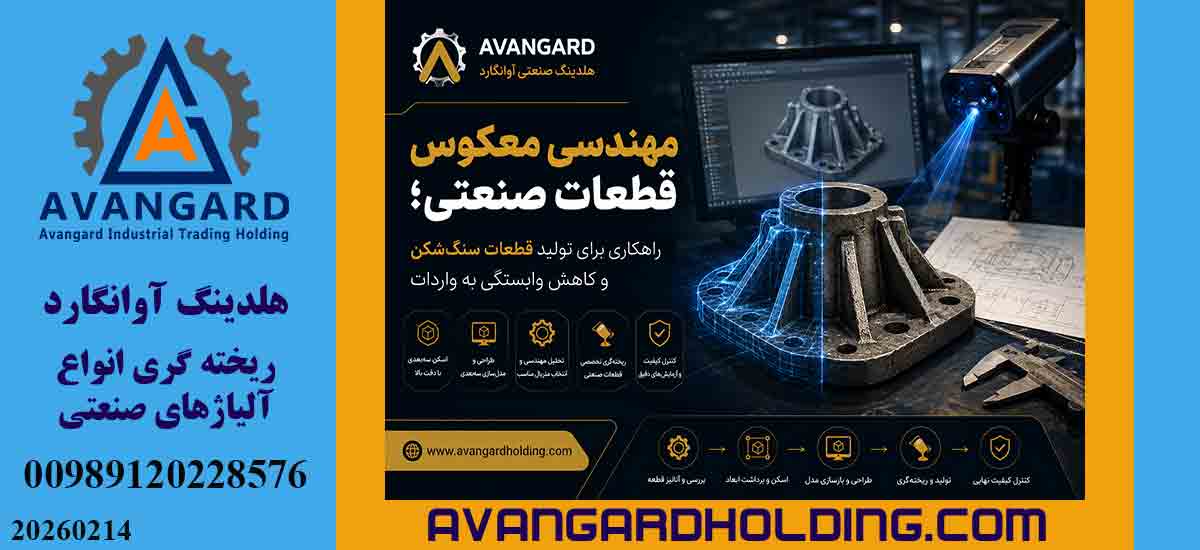
Why Does the Mining Industry Need Reverse Engineering?
Equipment used in mines, aggregate production plants, and mineral processing facilities operates continuously under harsh working conditions characterized by heavy impact, severe abrasion, and high mechanical loads. As a result, wear parts and critical machine components require regular replacement to maintain operational efficiency and prevent unexpected failures.
In many cases, the required spare part is no longer manufactured by the original equipment manufacturer (OEM), or its delivery lead time is excessively long. Additionally, import costs, international transportation expenses, customs procedures, and exchange rate fluctuations can substantially increase the final cost of replacement components. Under these circumstances, reverse engineering offers an efficient and cost-effective solution for manufacturing high-quality replacement parts locally while ensuring continuous production and reducing operational interruptions.
Key Stages of Reverse Engineering for Industrial Parts
Reverse engineering is a systematic and highly technical engineering process carried out through a series of well-defined stages. Proper execution of each step is essential to ensure the quality, performance, and reliability of the final product.
1. Initial Component Assessment
The process begins with a comprehensive inspection of the existing component. Engineers evaluate its overall condition, including wear patterns, cracks, deformation, surface damage, and evidence of operational failure. In addition, important information regarding the component’s installation location, loading conditions, operating environment, and service history is collected to better understand its functional requirements.
2. Precision Measurement and Dimensional Inspection
The next stage involves capturing the component’s exact dimensions and geometry using high-precision measuring equipment such as calipers, micrometers, Coordinate Measuring Machines (CMM), and 3D laser scanners. Accurate dimensional data is fundamental for developing a precise engineering model and ensuring the interchangeability of the reproduced part.
3. Three-Dimensional CAD Modeling
Based on the collected measurements, engineers create a detailed three-dimensional CAD model using professional engineering software such as SolidWorks or CATIA. This digital model serves as the foundation for manufacturing, design modifications, performance optimization, and future engineering documentation.
4. Material and Alloy Identification
Material identification is one of the most critical stages of the reverse engineering process. Many industrial components are manufactured from specialized engineering alloys whose mechanical properties directly influence performance, durability, and service life.
For example, components subjected to heavy impact loads are commonly manufactured from Hadfield Manganese Steel because of its exceptional toughness and work-hardening characteristics. In contrast, parts exposed to severe abrasive wear are typically produced from Ni-Hard Cast Iron or High Chromium White Cast Iron, both of which provide outstanding wear resistance in demanding mining and aggregate processing applications.
5. Pattern and Mold Manufacturing
When the component is to be reproduced through casting, the finalized engineering design is used to manufacture the appropriate casting pattern and mold. This stage is critical for achieving dimensional accuracy, consistent casting quality, and efficient production of industrial cast components.
6. Manufacturing, Machining, Heat Treatment, and Quality Control
Following the casting process, the component undergoes machining, heat treatment, and comprehensive quality inspections. Dimensional verification, metallurgical analysis, mechanical testing, and other quality assurance procedures are performed to ensure that the finished part fully complies with the required engineering specifications and international quality standards before being placed into service.
Selecting the Right Alloy in Reverse Engineering
One of the greatest advantages of reverse engineering is the opportunity to select an alloy with superior performance compared to the original component. In many cases, the service life of an OEM part is limited due to inappropriate material selection or demanding operating conditions. By thoroughly evaluating the equipment’s working environment, engineers can choose an alloy that offers enhanced resistance to abrasion, impact, or corrosion, thereby improving overall durability and operational efficiency.
For example, in the manufacturing of jaw crusher wear parts such as jaw plates and cheek plates, the use of Hadfield manganese steel significantly improves impact resistance and work-hardening performance. Conversely, for components such as liners and other wear parts exposed to severe abrasive conditions, high-chromium white cast iron or Ni-Hard cast iron provides outstanding wear resistance and extended service life.
Comparison of Common Alloys Used in Reverse Engineering of Crusher Wear Parts
Selecting the appropriate alloy is one of the most critical decisions in the reverse engineering process. In addition to accurately reproducing the component’s dimensions and geometry, engineers must evaluate several operational factors, including wear mechanisms, impact loads, ambient temperature, and the characteristics of the processed mineral. Even when a component is manufactured with exceptional dimensional accuracy, selecting an unsuitable alloy can significantly reduce its service life while increasing maintenance costs and equipment downtime.
In the mining and aggregate industries, reverse-engineered components are typically manufactured from alloys specifically designed to withstand severe abrasion, heavy impact loads, and cyclic mechanical stresses. Choosing the optimum material not only enhances equipment reliability but also minimizes maintenance requirements, reduces replacement frequency, and improves the overall productivity of crushing operations.
| Alloy | Key Characteristics | Typical Applications |
| Hadfield Manganese Steel | Exceptional impact resistance with excellent work-hardening capability | Jaw plates, cheek plates, and other jaw crusher wear parts |
| Manganese Steel | High toughness and excellent performance under heavy impact loading | Crusher wear parts, mining equipment components, and heavy-duty applications |
| Ni-Hard Cast Iron | Outstanding abrasion resistance and long service life in highly abrasive environments | Wear liners, mill liners, and components exposed to severe abrasive wear |
| High-Chromium Cast Iron (High Chrome White Iron) | Superior resistance to abrasion and corrosion | VSI crusher wear parts, slurry pump components, liners, and crushing equipment wear parts |
| Alloy Steels | High mechanical strength, excellent toughness, and superior load-bearing capacity | Shafts, gears, power transmission components, and other heavy-duty industrial parts |
The Role of Raw Materials in the Quality of Reverse-Engineered Components
The quality of raw materials plays a decisive role in the performance and service life of reverse-engineered components. Even when design, pattern making, casting, machining, and heat treatment are executed to the highest standards, the use of low-quality raw materials can result in cracking, premature failure, reduced wear resistance, and shortened operational life.
For the production of wear-resistant cast components, the use of high-quality ferroalloys—including ferromanganese, ferrochrome, and ferromolybdenum—is particularly important. These alloying materials precisely adjust the chemical composition of the molten metal, improving the component’s mechanical properties, metallurgical structure, hardness, strength, and overall durability. Proper alloy selection also enhances resistance to abrasion, impact loading, and fatigue, making the final product more reliable under demanding mining conditions.
For this reason, leading manufacturers of crusher wear parts and industrial castings continuously monitor not only their foundry processes but also the quality of incoming raw materials. Strict raw material control ensures that every casting complies with international quality standards and delivers consistent performance in the field.
Quality Control: The Final Step in the Reverse Engineering Process
Once the component has been manufactured, a comprehensive quality control (QC) process is carried out to verify that the finished product fully complies with the original design specifications. This stage confirms that the component meets all dimensional, metallurgical, and mechanical requirements, ensuring reliable performance under actual operating conditions.
Depending on the type of component and its intended application, various inspection and testing methods are performed, including:
- Chemical composition analysis
- Hardness testing
- Tensile testing
- Metallographic (microstructure) examination
- Magnetic Particle Testing (MT)
- Liquid Penetrant Testing (PT)
- Dimensional inspection using precision measuring equipment
For critical components used in mining and crushing equipment, Non-Destructive Testing (NDT) techniques are also employed to detect internal defects such as cracks, shrinkage cavities, porosity, and other discontinuities without damaging the component.
A rigorous quality control program not only ensures the reliability and durability of reverse-engineered parts but also minimizes the risk of unexpected equipment failures, costly downtime, and unplanned maintenance, ultimately improving the productivity and operational efficiency of mining and aggregate processing plants.
Advantages of Reverse Engineering for the Mining Industry
The application of reverse engineering in the mining industry extends far beyond simply reproducing worn or obsolete components. It provides substantial technical, operational, and economic benefits that improve equipment reliability, reduce operating costs, and enhance overall plant productivity.
The key advantages of reverse engineering include:
- Reduced dependence on imported spare parts
- Shorter lead times for manufacturing and supplying replacement components
- Lower procurement, logistics, and transportation costs
- Opportunities to optimize and improve original component designs
- Selection of the most suitable alloy based on actual mining operating conditions
- Extended service life of wear parts and critical components
- Reduced downtime of crushing and processing plants
- Ability to reproduce obsolete, discontinued, or hard-to-source components
- Strengthening domestic engineering expertise and manufacturing capabilities
In many industrial projects, reverse engineering has not only enabled the successful reproduction of critical components but has also resulted in performance improvements over the original designs. Through optimized engineering, advanced materials, and improved manufacturing processes, companies can achieve longer component life, lower maintenance costs, increased equipment reliability, and higher operational efficiency.
Challenges of Reverse Engineering Industrial Components
Despite its numerous advantages, successful reverse engineering requires a combination of engineering expertise, advanced manufacturing technologies, precision measuring equipment, and extensive practical experience. Even minor errors in dimensional measurement, material selection, or component design can significantly affect the performance, reliability, and service life of the final product.
Some of the most common challenges encountered during the reverse engineering process include:
- Lack of technical drawings or original engineering documentation
- Severe wear, deformation, or failure of the original component
- Complex component geometry requiring high-precision 3D measurement
- Incorrect selection of raw materials or casting alloys
- Improper heat treatment processes affecting mechanical properties
- Inadequate quality control and insufficient final inspection procedures
For these reasons, reverse engineering projects should be carried out by a multidisciplinary team consisting of specialists in mechanical design, metallurgy, foundry engineering, machining, heat treatment, and quality control. This integrated engineering approach ensures that the final component not only accurately replicates the original design but also delivers the durability, reliability, and performance required for demanding mining and industrial applications.
The Future of Reverse Engineering in the Industrial Sector
The rapid advancement of technologies such as 3D scanning, Point Cloud-based design, Artificial Intelligence (AI), and Additive Manufacturing (3D Printing) is transforming the field of reverse engineering. These innovations not only improve measurement accuracy and engineering precision but also significantly reduce the time required for component design, development, and production.
Looking ahead, an increasing number of industrial components will be developed through the integration of reverse engineering, Computer-Aided Engineering (CAE), Finite Element Analysis (FEA), and advanced engineering simulations. This comprehensive approach enables engineers to optimize component geometry, reduce weight, enhance mechanical performance, extend service life, and improve overall operational efficiency while maintaining or even exceeding the strength and durability of the original design.
As digital manufacturing technologies continue to evolve, reverse engineering will become an essential part of predictive maintenance, product optimization, and the modernization of industrial equipment across the mining, aggregate, and heavy machinery sectors.

Conclusion
Reverse engineering of industrial components has become one of the most effective engineering solutions for manufacturing high-quality replacement parts, reducing dependence on imported components, and improving the operational efficiency of mining and industrial facilities. Rather than simply replicating an existing part, reverse engineering combines advanced engineering design, optimized alloy selection, premium raw materials, precision casting, heat treatment, machining, and rigorous quality control to produce components that often outperform the original OEM products.
In the mining and crushing industries, where unexpected equipment downtime can result in significant production losses and maintenance costs, reverse engineering plays a critical role in extending the service life of crusher wear parts, improving equipment reliability, and minimizing operational interruptions. When performed by an experienced engineering team equipped with modern technologies, reverse engineering enables the rapid production of high-performance components while ensuring exceptional quality, durability, and long-term reliability.
Avangard Industrial Trading Holding specializes in the design, reverse engineering, manufacturing, and supply of crusher wear parts, mining equipment components, road construction machinery parts, and industrial castings. Leveraging advanced engineering expertise, modern foundry technologies, and extensive industry experience, Avangard delivers reliable, high-quality solutions tailored to the demanding requirements of the mining, aggregate, and heavy industrial sectors, helping customers maximize equipment performance while reducing maintenance costs and operational downtime.
🏢 Avangard Industrial Trading Holding Company – A pioneer in supplying and manufacturing casting parts in the Middle East 🌍 📞 Phone: +98 912 022 8576 🌐 Website: En.Avangardholding.com


