 فارسی
فارسی  العربية
  Русский
  Azərbaycan

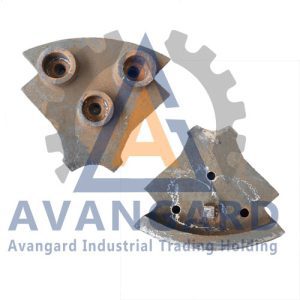
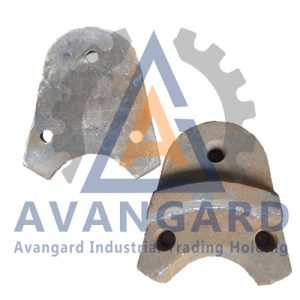
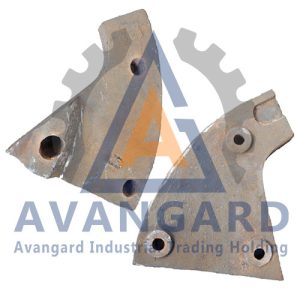
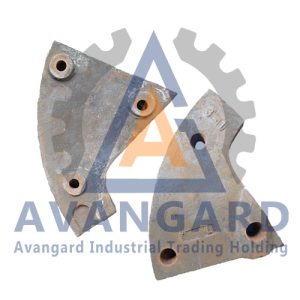
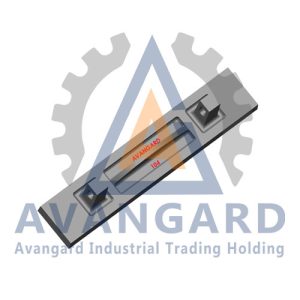
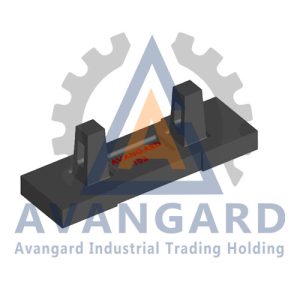
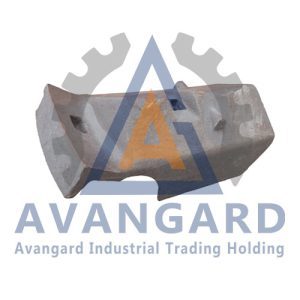
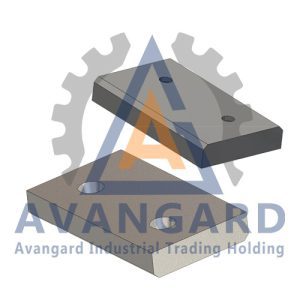
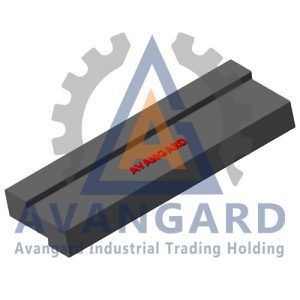
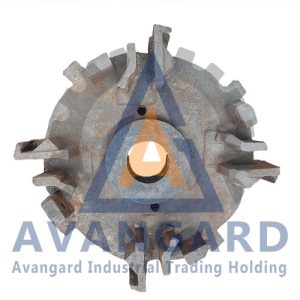


In industrial casting operations, one of the most critical parameters determining component quality is the control of dimensional and geometrical tolerances. The production of high-performance parts such as crusher hammers, Hydrocone concaves and mantles , jaw plates, and wear-resistant components requires standardized, repeatable dimensional accuracy.
The ISO 8062 standard, developed by the International Organization for Standardization, serves as the global reference for specifying dimensional tolerances of cast components. It provides a precise framework for classifying accuracy levels in casting processes.
In this article, we present a technical analysis of ISO 8062, tolerance classifications, its impact on casting quality, and its role in improving productivity within mining and crushing industries.

What is ISO 8062?
ISO 8062 is an international standard that defines dimensional tolerances for cast metal components. The standard specifies the permissible deviations from nominal dimensions based on the selected casting process, including:
- Sand casting
- Shell molding
- Investment casting (lost wax)
- Die casting
- And other metal casting methods
According to ISO 8062, the primary objectives of this standard are:
- Establishing a common technical language between manufacturer and purchaser
- Reducing technical discrepancies in part procurement
- Improving assembly compatibility of industrial components
- Enabling systematic quality control in casting production
Classification of Casting Tolerance Grades (CT Grades)
In ISO 8062, tolerances are designated as Casting Tolerance Grades (CT Grades).
The smaller the CT number, the higher the dimensional accuracy of the casting.
Common Casting Tolerance Grades in Metal Casting
| Tolerance Grade | Accuracy Level | Typical Application |
| CT3 – CT5 | Very High Precision | Precision casting, metal mold casting |
| CT6 – CT8 | Medium Precision | Components requiring machining |
| CT9 – CT11 | General Precision | Sand casting applications |
| CT12 – CT16 | Low Precision | Heavy industrial castings |
In the mining and crushing equipment industry, cast components are typically produced within the CT8 to CT11 range, as post-casting machining operations are commonly performed to achieve final dimensional accuracy and assembly compatibility.
This tolerance range provides a balanced approach between production cost efficiency and functional precision, particularly for wear parts and structural components used in crushing systems and aggregate processing plants.
Factors Affecting Dimensional Tolerances in Cast Components
The final dimensional tolerance of a cast part is not determined solely by the standard itself; it is influenced by multiple technical and metallurgical factors:
1️⃣ Molding Method
- Sand Casting → Higher tolerance range
- Investment / Precision Casting → Lower tolerance range
The selected molding process directly impacts dimensional repeatability and surface accuracy.
2️⃣ Alloy Composition
Alloy chemistry significantly affects solidification behavior and shrinkage characteristics.
Alloyed cast irons with high carbon and silicon content exhibit different shrinkage behavior compared to alloy steels. Therefore, shrinkage allowance and tolerance control must be adjusted based on the metallurgical properties of the selected material.
3️⃣ Component Dimensions
As the overall size of the casting increases, the permissible tolerance range generally becomes wider.
Large and heavy industrial castings naturally experience greater dimensional variation due to thermal gradients and solidification dynamics.
4️⃣ Solidification Rate and Shrinkage Control
Proper control of molten metal contraction during solidification plays a decisive role in achieving standard dimensional tolerances.
Optimized gating systems, riser design, and thermal management are critical in minimizing distortion and dimensional deviation.
Importance of ISO 8062 in Mining and Crushing Industries
Within the operational scope of Avangard Industrial & Commercial Holding, the production of components such as:
- Hydrocone mantles and concaves
- Fixed and swing jaw plates
- Sand crusher hammers
- High-chromium wear-resistant parts
- Oil and gas industry cast components
requires strictly controlled dimensional accuracy.
Failure to comply with standardized tolerance specifications can lead to:
- Excessive machine vibration
- Reduced bearing service life
- Increased wear and mechanical stress
- Decreased production efficiency
The implementation of ISO 8062 ensures that manufactured components are fully interchangeable, enabling seamless installation and assembly within crushing lines and heavy industrial systems.
By adhering to defined Casting Tolerance Grades (CT), manufacturers can guarantee dimensional consistency, operational stability, and long-term performance reliability in mining and aggregate processing equipment.
Relationship Between Tolerance and Production Cost
One of the important points in casting engineering is balancing accuracy and cost.
| Accuracy Level | Tooling Cost | Machining Requirement | Final Component Cost |
| High Precision (CT3–CT5) | High | Low | High |
| Medium Precision (CT6–CT8) | Moderate | Moderate | Balanced |
| General Precision (CT9–CT11) | Low | High | Economical |
In many mining components, selecting an economical tolerance grade (CT8–CT10) is the most practical choice, as secondary machining operations are performed.
Benefits of Implementing ISO 8062 in Casting Companies
✅ Reduced rework ✅ Improved quality control ✅ Increased customer satisfaction ✅ Export readiness of components ✅ Reduced contractual disputes
For companies involved in supplying casting raw materials and manufacturing industrial components, adherence to this standard translates into enhanced brand credibility and increased international competitiveness.
Role of Raw Materials in Achieving Standard Tolerances
Precise control of the chemical composition of raw materials such as:
- Ferrosilicon
- Ferromanganese
- Standard steel scrap
- Alloyed ingots
helps minimize shrinkage variations and achieve more accurate dimensions. High levels of impurities can lead to:
- Porosity
- Warping
- Dimensional distortion
- Increased production waste
which directly affects compliance with ISO 8062.

Conclusion
The ISO 8062 standard, as the international reference for defining tolerances of cast components, plays a key role in the quality, accuracy, and assembly compatibility of industrial parts. In mining and crushing industries, where components are subjected to high stress and wear, adherence to this standard not only increases equipment service life but also reduces maintenance costs and production downtime.
For companies like Avangard Industrial & Commercial Holding, specializing in casting and the supply of raw materials, implementing ISO 8062 requirements can provide a significant competitive advantage in both domestic and export markets.
🏢 Avangard Industrial Trading Holding Company – A pioneer in supplying and manufacturing casting parts in the Middle East 🌍 📞 Phone: +98 912 022 8576 🌐 Website: En.Avangardholding.com


