فارسی
فارسی  العربية
  Русский
  Azərbaycan

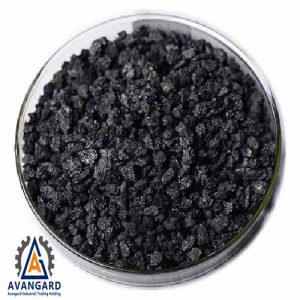
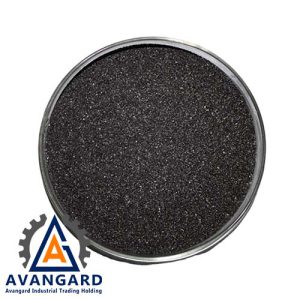
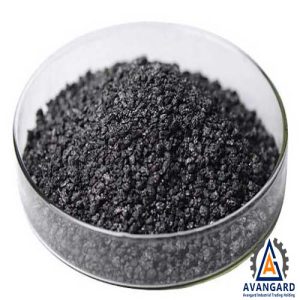


Pencil graphite is one of the most well-known and widely used materials in everyday life. Many people assume that the core of a pencil is made of “lead,” whereas its primary constituent is actually graphite—an allotropic form of carbon with a distinctive layered structure.
This unique structure allows graphite to easily transfer onto paper and create a dark mark. Beyond the stationery industry, graphite is extensively used in foundry operations, metallurgy, refractory manufacturing, and battery production.

In this article, we examine the structure, production process, hardness grading, advantages, and industrial applications of pencil graphite.
What Is Graphite?
Graphite is one of the crystalline forms (allotropes) of carbon, alongside diamond and fullerenes. The primary difference between graphite and diamond lies in the atomic arrangement of carbon atoms.
- In graphite, carbon atoms are arranged in hexagonal sheets.
- These sheets are stacked in layered structures.
- The bonding between layers is relatively weak, allowing them to slide over one another easily.
This layered configuration is the fundamental reason behind graphite’s writing capability. When pressure is applied, thin layers detach and adhere to the writing surface.
Composition of Pencil Core
The pencil core is not made of pure graphite. Its formulation typically consists of:
- Natural or synthetic graphite powder
- Clay (to provide mechanical strength and control hardness)
- Water (for mixing and extrusion forming)
The ratio of graphite to clay determines the softness or hardness of the pencil. A higher graphite content produces a softer, darker mark, while a higher clay content increases hardness and lightness of writing.
Pencil Hardness Grading Table
Pencils are classified according to the ratio of graphite to clay in the core formulation. The following table presents the commonly accepted grading system:
| Pencil Grade | Hardness Level | Approximate Graphite Content | Typical Applications |
| 9H to H | Very Hard to Semi-Hard | Low | Technical drawing, engineering drafting |
| HB | Medium | Balanced | General writing |
| B | Soft | High | General sketching |
| 2B to 9B | Very Soft | Very High | Artistic drawing, shading |
Note on Pencil Grade Symbols
- H stands for Hard
- B stands for Black (darker mark)
- HB represents a balanced composition between hardness and blackness
Pencil Core Manufacturing Process
The production of pencil graphite cores involves several controlled industrial stages:
- Graphite extraction and milling Natural graphite is mined and then finely ground to achieve a uniform particle size distribution. Synthetic graphite may also be used depending on quality requirements.
- Blending with clay and water The graphite powder is mixed with carefully proportioned clay and water to form a homogeneous paste. The formulation determines the final hardness grade.
- Extrusion The mixture is forced through precision dies to produce continuous cylindrical rods of consistent diameter.
- Drying The extruded rods are dried under controlled conditions to remove excess moisture and prevent cracking.
- High-temperature firing (Kiln baking) The dried cores are fired in kilns at elevated temperatures to strengthen the ceramic bonding phase created by clay.
- Wax or oil impregnation The fired cores are impregnated with wax or oil to enhance smoothness, reduce friction, and improve writing performance.
After preparation, the finished graphite core is placed between two grooved wooden slats and pressed together to form the final pencil structure.
Physical and Chemical Properties of Pencil Graphite
Graphite possesses a set of unique physical and chemical characteristics that make it ideal for writing applications:
- Gray to black color
- High electrical conductivity
- Good thermal resistance
- Natural lubricity (low friction coefficient)
- Chemical stability at ambient temperatures
From a materials science perspective, graphite’s layered crystalline structure (sp² carbon bonding within planes and weak van der Waals forces between planes) is responsible for its combined mechanical softness and structural stability.
Why Does Graphite Write on Paper?
The writing mechanism of graphite is directly related to its microstructure:
- Graphite layers can easily separate from one another.
- When the pencil tip contacts paper, thin carbon layers detach.
- These detached layers adhere to the cellulose fibers of the paper surface.
- Low friction between layers enables smooth pencil movement.
In essence, writing occurs through controlled lamellar shear and surface adhesion rather than melting or chemical reaction.

Types of Graphite Used in Pencil Manufacturing
Graphite used in the pencil industry is generally classified into two primary categories:
- Natural Graphite
- Extracted from mineral deposits
- High purity levels (depending on ore grade and beneficiation process)
- Generally higher cost
Natural graphite is typically processed through flotation, purification, and micronization before being incorporated into pencil formulations.
- Synthetic Graphite
- Produced from petroleum coke at extremely high temperatures (often above 2500°C)
- Greater uniformity in structure and particle size
- More precise control over physical and chemical properties
Synthetic graphite allows manufacturers to achieve consistent performance characteristics, particularly in high-grade or specialized writing applications.
Advantages of Using Graphite in Pencils
- Safe and non-toxic • Erasable with an eraser • Economical cost • Capable of being produced in various hardness grades • More environmentally friendly compared to chemical inks
Comparison of Graphite with Other Writing Materials
| Feature | Pencil Graphite | Ballpoint Pen | Marker |
| Erasability | Yes | No | No |
| Durability of Mark | Medium | High | High |
| Range of Darkness Levels | Wide | Limited | Medium |
| Requires Ink | No | Yes | Yes |
Applications Beyond Writing
Although pencil graphite is primarily known for writing, it has broader applications:
- Industrial and architectural drafting • Artistic drawing and portrait sketching • Simple electrical conductivity testing • Use in technical workshops • Marking on metals and wood
The Role of Graphite in Industry
Graphite is not limited to pencil manufacturing. This material is widely used in various industries:
- Electrodes for electric arc furnaces • Foundry refractories • Dry lubricant components • Lithium-ion batteries
In the foundry industry, graphite plays a significant role in molds and coatings due to its high thermal resistance and lubricating properties.
Interesting Facts About Pencil Graphite
- The first major graphite mines were discovered in England. • The term “pencil lead” is a historical misnomer. • Early pencils were made entirely of pure graphite. • Paper quality significantly affects the darkness of pencil marks.
Conclusion
Pencil graphite is a simple yet scientifically fascinating material. Its layered carbon structure allows it to deposit easily on paper and be erasable. By adjusting the graphite-to-clay ratio, different hardness grades can be produced, suitable for a range of applications from everyday writing to professional drafting.
From a basic writing tool to advanced industrial uses, graphite holds a special place in human life. A precise understanding of this material can help in selecting the right pencil for various applications and in gaining a better comprehension of carbon properties in advanced industries.
🏢 Avangard Industrial Trading Holding Company – A pioneer in supplying and manufacturing casting parts in the Middle East 🌍 📞 Phone: +98 912 022 8576 🌐 Website: En.Avangardholding.com