 فارسی
فارسی  العربية
  Русский
  Azərbaycan

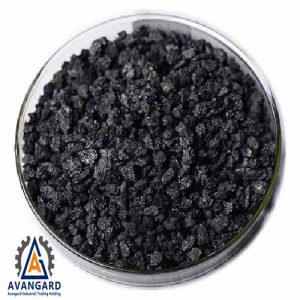
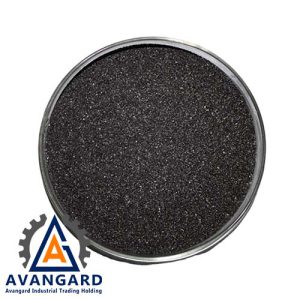
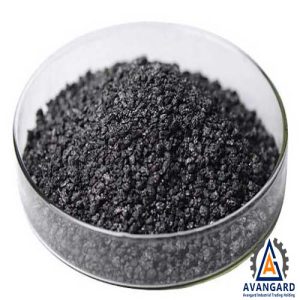


In the foundry and metallurgical industries, a graphite solvent plays a critical role in improving casting quality and reducing production waste. These materials are used to effectively disperse graphite particles in:
- Mold coatings and release agents (foundry facing & mold release compounds)
- Industrial graphite lubricants
- Foundry and metallurgical additives
Due to its layered crystalline structure, graphite exhibits high thermal conductivity and excellent heat resistance. When a suitable solvent system is used, graphite particles achieve uniform dispersion within the medium. This controlled dispersion ensures consistent coating performance on mold surfaces and significantly reduces molten metal adhesion during pouring.
As a result:
- Surface finish quality of cast components is improved
- Casting defects are minimized
- Mold service life is extended
- Overall production efficiency increases
In the selection, supply, manufacturing, and distribution of foundry raw materials, Avangard Holding provides industrial-grade graphite products along with specialized technical consultation. By combining material expertise with practical foundry knowledge, Avangard Holding delivers optimized solutions for precision casting, Cast Components applications and waste reduction in industrial production environments.

Why does graphite not dissolve under normal conditions? An analysis of its crystalline structure and chemical behavior.
To understand the concept of a “graphite solvent,” it is first necessary to recognize that graphite is inherently an insoluble material and does not dissolve under normal conditions in water or most organic solvents. The reason for this lies in its layered crystalline structure. Graphite consists of hexagonal carbon sheets bonded through strong covalent bonding, organized into a two-dimensional layered crystal lattice structure. Between these layers, only van der Waals forces are present, allowing the layers to slide easily over one another and creating lubricity; however, this same stable structure causes graphite to remain chemically stable in most environments. In practice, what is referred to in industry as a graphite solvent generally means dispersion systems or carrier media that keep graphite particles uniformly suspended rather than dissolving them in the true chemical sense. This characteristic enables graphite to maintain stable performance at high temperatures, in corrosive environments, and throughout casting processes. In metal component manufacturing industries, understanding this chemical behavior is highly important for proper material selection, quality control, waste reduction, and price management as well as raw material procurement, and Avangard Holding meets this specialized need by supplying standardized industrial materials.
Comparison Table of Graphite Behavior in Various Chemical and Industrial Environments
| Feature | Scientific Description | Impact in Casting | Technical Term |
| Layered structure | Carbon sheets with strong covalent bonds | Creates lubricity and reduces mold friction | Layered crystal structure |
| Atomic bonding type | Strong covalent bonds within layers | High stability at elevated temperatures | Covalent bonding |
| Interlayer forces | Weak van der Waals forces between layers | Enables easy layer sliding and prevents molten metal adhesion | Van der Waals forces |
| Solubility level | Practically insoluble in water and common solvents | Requires industrial dispersion systems | Dispersion system |
| Thermal resistance | Stable at temperatures above 1000°C under controlled conditions | Suitable for casting ferrous and non-ferrous metals | Thermal stability |
| Thermal conductivity | Rapid heat transfer capability | Reduces thermal shock in molds | Thermal conductivity |
| Chemical resistance | Stable against many corrosive substances | Extends mold life and reduces production costs | Chemical resistance |
The Role of Graphite Solvents in Modern Casting: From Mold Coatings to Thermal
Lubrication
Graphite solvents serve as a primary component in mold coatings such as mold wash or foundry facing, as well as in surface lubricants (graphite lubricant). Selecting an appropriate solvent ensures that graphite particles are uniformly dispersed within the solution and, once applied to the mold surface, form a dense and well-structured layer. This layer not only facilitates easy release of the final casting but also prevents mold wear and extends its service life.
Furthermore, the high thermal resistance and thermal conductivity of graphite allow molds to remain stable under elevated temperatures. Proper use of graphite solvent ensures improved surface quality of finished components, reduced adhesion, and enhanced mold surface wetting.
In industrial processes, careful attention to the quality and specifications of solvents and graphite materials has a direct impact on waste reduction, improved production line performance, and effective cost control.
The Impact of Graphite Solvents on Casting Quality and Process Performance
One of the most important applications of graphite solvents is the improvement of casting surface quality. These materials ensure that the mold coating remains uniform, allowing the final component to be produced without cracks, scaling, or surface defects. Proper dispersion of graphite particles within the solvent reduces adhesion and increases lubricity, thereby facilitating a smoother casting process. Graphite-based solvents also enhance the thermal shock resistance of molds and significantly extend their service life. For both ferrous and non-ferrous metal casting, these materials play a vital role in defect reduction and production efficiency improvement. Selecting the appropriate solvent, along with the quality of graphite and its formulation, is a key factor influencing pricing, procurement, sales of raw materials, and the overall optimization of industrial manufacturing processes.
Guide to Selecting and Purchasing Graphite Solvents for the Foundry Industry
Choosing the appropriate graphite solvent depends on the type of cast metal, operating temperature, and mold characteristics. Industrial-grade solvents must provide suitable dispersion characteristics, thermal resistance, and chemical compatibility. The use of low-quality solvents can result in surface defects, reduced mold lifespan, and increased production waste. Avangard Holding, by supplying a wide range of graphite solvents and industrial mold coatings, enables manufacturers to select the most suitable raw materials for production, procurement, and commercial supply. The specialized technical consultation provided by Avangard experts assists manufacturers in selecting high-quality materials at optimized pricing, ultimately improving the efficiency of industrial casting processes.

Conclusion on Graphite Solvents
Graphite solvent is a key material in the foundry industry that, through proper dispersion of graphite particles, enables improved surface quality of cast components, extended mold life, and reduced production waste. The use of suitable solvents in combination with high-quality graphite has a direct impact on manufacturing processes, production efficiency, procurement, sales, and pricing of foundry raw materials.
Avangard Holding, by supplying industrial-grade products and providing specialized technical consultation, delivers comprehensive solutions for production line optimization and increased operational efficiency. Careful selection of the appropriate solvent not only enhances the quality of final cast parts but also reduces production costs and maximizes the productivity of industrial operations.
🏢 Avangard Industrial Trading Holding Company – A pioneer in supplying and manufacturing casting parts in the Middle East 🌍 📞 Phone: +98 912 022 8576 🌐 Website: En.Avangardholding.com


