 فارسی
فارسی  Arabic
  Russian

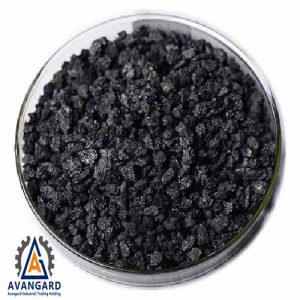
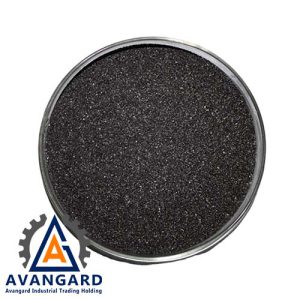
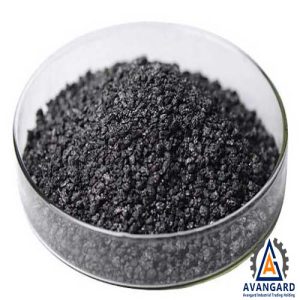


High-sulfur graphite is primarily produced from petroleum coke, a by-product of the crude oil refining process. In this process, raw petroleum coke is subjected to high-temperature heat treatment in specialized calcining furnaces at temperatures exceeding 1200 °C.
The main objective of this thermal treatment is to remove volatile compounds and residual moisture from the raw petroleum coke and convert it into high-sulfur graphite. During the calcining process, the sulfur content is precisely controlled to ensure that the final product meets specific technical requirements for targeted industrial applications.
This production method results in high-sulfur graphite with a defined sulfur percentage and stable physical and chemical properties, making it suitable for applications such as the chemical industry, lubricant production, and manufacturing of refractory bricks.
High-Sulfur Graphite (CPC – Calcined Petroleum Coke), also known as calcined petroleum coke with elevated sulfur content, is considered a strategic and essential material across various industries. Owing to its unique characteristics, it is widely utilized in manufacturing, foundry operations, and steelmaking industries.
The purpose of this article is to provide a comprehensive overview of CPC, including its production methods, applications, key consuming industries, and leading producers, enabling industrial users to make informed decisions and achieve optimal utilization of this valuable carbon-based material.

Production Method of High-Sulfur Graphite (High-Sulfur Graphite – CPC)
High-sulfur graphite is mainly produced from raw petroleum coke, a by-product of the crude oil refining process. In this method, raw petroleum coke undergoes thermal treatment in specialized calcining furnaces at temperatures exceeding 1200 °C.
The purpose of this process is to remove volatile compounds and residual moisture and convert raw petroleum coke into high-sulfur graphite. During calcination, the sulfur content is carefully controlled to optimize the final product for specific industrial applications, particularly in the steelmaking and foundry industries.
Applications of High-Sulfur Graphite
High-sulfur graphite has wide-ranging applications across various industries, including:
- Steelmaking Industry
High-sulfur graphite is used as a carbon additive and a desulfurizing agent in steelmaking processes, where it performs multiple critical functions:
- Carbon Addition
- Increasing the carbon content of molten metal in Electric Arc Furnaces (EAF) and Basic Oxygen Furnaces (BOF).
- Precise control of steel alloy composition to achieve desired mechanical properties.
- Ensuring consistency and uniformity of alloy composition in the final steel product.
- Desulfurizing Agent
- Reacting with sulfur present in molten steel to form removable compounds that are separated as slag.
- Reducing sulfur levels in steel, thereby improving mechanical properties and weldability of the final product.
- Carbon Content Control
- Enabling accurate adjustment of carbon levels in molten metal to meet specifications of various steel grades.
- Producing steel with optimal strength, hardness, and ductility, suitable for the automotive, construction, and machinery industries.
- Enhanced Heat Transfer and Conductivity
- Improving thermal conductivity of molten metal and promoting uniform heating during steelmaking.
- Increasing production efficiency and contributing to energy savings.
In summary, high-sulfur graphite is a multifunctional material in steelmaking, acting as a carbon additive, desulfurizing agent, and heat-transfer enhancer. It plays a vital role in achieving superior metallurgical properties and high-quality steel products.
- Foundry Industry
- Used as a critical component in molding and casting processes.
- Enhances the fluidity of molten metal and reduces defects such as porosity and shrinkage.
- Improves the overall quality and surface finish of cast products.

- Manufacturing Sector
- Utilized as a key raw material in the production of carbon electrodes.
- These electrodes are essential components of electric arc furnaces, used in metal melting and refining processes.
Comparative Table of Properties and Applications of High-Sulfur Graphite (CPC)
| Property / Application | Description |
| Sulfur Content (S) | High, typically ranging from 0.1% to 0.5% |
| Carbon Purity (C) | High, but lower than that of low-sulfur graphite |
| Thermal Resistance | Excellent; suitable for heat treatment processes and steelmaking operations |
| Steelmaking Applications | Carbon additive, desulfurizing agent, enhancement of heat transfer, and precise carbon content control |
| Foundry Industry | Improves molten metal fluidity, reduces casting defects, and enhances overall product quality |
| Manufacturing Sector | Key raw material for the production of carbon electrodes used in electric arc furnaces (EAF) |
| Multifunctional Properties | Carbon addition, heat transfer facilitation, and sulfur control |
Conclusion and Purchasing High-Sulfur Graphite from Avangard
High-Sulfur Graphite (CPC), with its elevated sulfur content and stable physical and chemical properties, is considered a strategic material in the steelmaking, foundry, and manufacturing industries. The use of this material contributes significantly to improving steel quality, precise alloy composition control, and enhancing overall production efficiency.
Avangard is recognized as a reliable and professional supplier of high-quality high-sulfur graphite, offering strict production process control and expert technical consultation tailored to industrial needs. Purchasing high-sulfur graphite from Avangard ensures consistent quality, optimal performance, and reduced production costs for steel plants, foundries, and industrial component manufacturers.
🏢 Avangard Industrial Trading Holding Company – A pioneer in supplying and manufacturing casting parts in the Middle East 🌍 📞 Phone: +98 912 022 8576 🌐 Website: En.Avangardholding.com


