 فارسی
فارسی  Arabic
  Russian


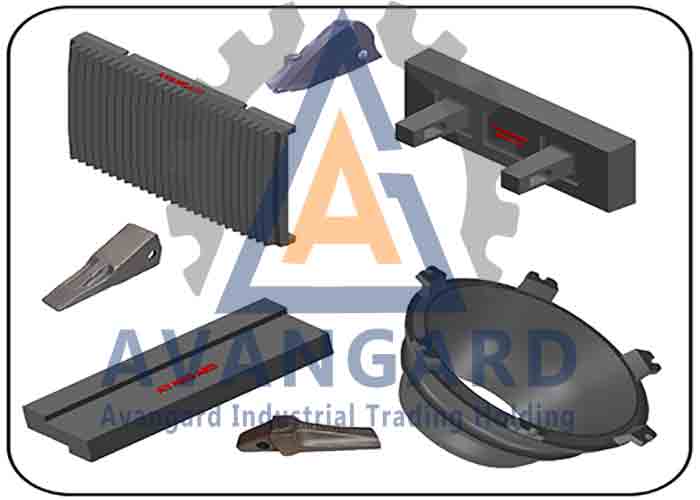
Manganese Steel: History and Unique Properties of This Alloy
Hadfield steel, also known as Austenitic Manganese Steel, is one of the most impact- and wear-resistant steels, discovered in 1882. It is among the most important alloy steels and, due to its high resistance to wear and impact, is widely used across various industries — especially in mining crusher equipment.
In this article, we will discuss the chemical composition, heat treatment, Hadfield plate, welding methods, structure, analysis, standards, applications, and pricing of manganese steel. It should be noted that Hadfield steel is another name for manganese steel. We will also briefly cover topics such as molybdenum-manganese steel, crusher-grade manganese steel, high-manganese steel, austenitic manganese steel, and the role of manganese in steel.
Stay with Avangard Holding, the leading producer of manganese steel.
Avangard Holding is one of the pioneers in the production of Hadfield steel and in providing specialized services in casting materials and products. With advanced technical expertise and modern equipment, Avangard has become a key supplier for heavy industries.
By focusing on precise design and modeling, Avangard produces high-quality and high-performance components used in mining, cement, and crushing industries.
Avangard’s services include raw material supply, casting, heat treatment, and machining. The company specializes in producing spare parts for crushers — such as hammers, liners, and wear-resistant components.
Using premium raw materials and strict quality control ensures the durability and efficiency of Avangard’s products.
Hadfield Steel (Manganese Steel): Properties and Chemical Composition
Hadfield steel, also known as manganese steel, is one of the most wear- and impact-resistant types of steel. Owing to its austenitic structure and special chemical composition, it is widely used in heavy industries such as mining, road construction, and the production of crusher components.
If you are looking to purchase Hadfield steel or manganese steel with high quality and a reasonable price, Avangard is one of the specialized suppliers of this product. You can contact our experts for up-to-date prices of Hadfield steel, manganese steel, and austenitic steel.
We are also ready to supply various types of hardened steels for specialized industrial projects. With years of experience and expertise in the field of special steels, Avangard guarantees the highest quality in the shortest delivery time.
Chemical Composition of Hadfield Steel (Standards and Analysis)
Manganese steel, also known as manganese steel (Mangalloy), has a unique chemical composition that gives it distinctive properties suitable for harsh industrial environments. Developed by Sir Robert Abbott Hadfield, this steel became a remarkable and durable alloy that revolutionized the field of industrial materials.
In this article, we will examine the microstructure of Hadfield steel, its advantages and disadvantages, the effects of different alloying elements on its properties, as well as its welding, machining, and applications in the crusher industry. Below, one of the standard analyses of Hadfield steel is also provided.
DIN1.3401: Chemical composition
| symbol | شماره مواد | C | Si | Mn | P | S | Cr |
| Hadfield steel | 1.3401 | 1.1-1.3 | 0.3-0.5 | 12-13 | Max 0.1 | Max 0.04 | Max 1.5 |
Manganese Steel
Manganese steel, due to its outstanding mechanical properties and adaptability to harsh working conditions, is one of the most widely used alloy steels in various industries.
This steel is produced by combining iron with different percentages of manganese and other alloying elements, resulting in unique characteristics such as high impact resistance, superior toughness, and excellent corrosion durability.
With its ability to harden under impact (work hardening), this steel is ideal for applications that require resistance to shock and abrasion. Its metallurgical structure provides high resistance to cracking and fracture under severe working conditions. Excellent performance at elevated temperatures also makes it suitable for applications requiring thermal strength.
Effect of Alloying Elements on Hadfield Steel Properties
Various elements affect the properties and microstructure of manganese steel, including:
-
Manganese (Mn): The main alloying element in Hadfield steel, responsible for forming the austenitic structure and improving wear resistance.
-
Carbon (C): Increases hardness and wear resistance. Higher carbon content leads to increased hardness but reduced ductility.
-
Silicon (Si): Improves mechanical properties and increases hardness.
-
Chromium (Cr): Enhances corrosion resistance.
-
Molybdenum (Mo): Added in the range of 0.5–2%. Improves yield strength, increases ductility up to about 1.5%, prevents casting cracks, and enhances toughness.
-
Copper (Cu): Added between 0.1–5% to stabilize the austenitic phase. It can cause brittleness and fracture tendencies, though this effect has not been fully studied.
-
Titanium (Ti): Used to neutralize the effects of phosphorus. It forms stable carbides and significantly reduces the amount of dissolved carbon in austenite.
-
Phosphorus (P): Reduces ductility, especially at low temperatures, and increases the tendency for cracking at high temperatures.
-
Sulfur (S): Has minimal effect on Hadfield steel properties. It combines with manganese to form manganese sulfide (MnS).
Mechanical Properties of Hadfield Steel: From High Strength to Work Hardening
Hadfield steel possesses exceptional mechanical characteristics, giving it a special place among steel alloys.
Thanks to its work-hardening ability, the steel becomes even more resistant to continuous impact and abrasion.
The high strength of manganese steel results from its unique chemical composition, which typically contains 12–14% manganese, giving it superior toughness and durability under harsh conditions.
Hadfield Steel (Manganese Steel) in Mining and Industrial Equipment
One of the key features of this alloy is its high resistance to sudden changes in temperature and pressure. This property is particularly important in heavy industries such as mining, industrial component manufacturing, and heavy machinery. Heat treatment of Hadfield steel also plays a crucial role in improving its mechanical properties.
The application of Hadfield steel in mining equipment is especially notable due to its exceptional wear and impact resistance. This steel performs exceptionally well in environments that require high pressure and friction tolerance, significantly extending the service life of parts.
At Avangard Holding, Hadfield steel is used as a key raw material in the production of industrial components and mining equipment. Due to its unique chemical composition, this alloy is ideal for heavy industries such as sand and gravel, cement, construction machinery, and mining operations.
The combination of unique properties makes Hadfield steel an ideal choice for abrasive and impact-prone environments. These characteristics not only increase the durability of components but also significantly reduce maintenance and repair costs. Using Hadfield steel in mining and industrial equipment not only lowers costs but also improves operational efficiency and productivity. Its unmatched mechanical properties are the main reason for its popularity among manufacturers.
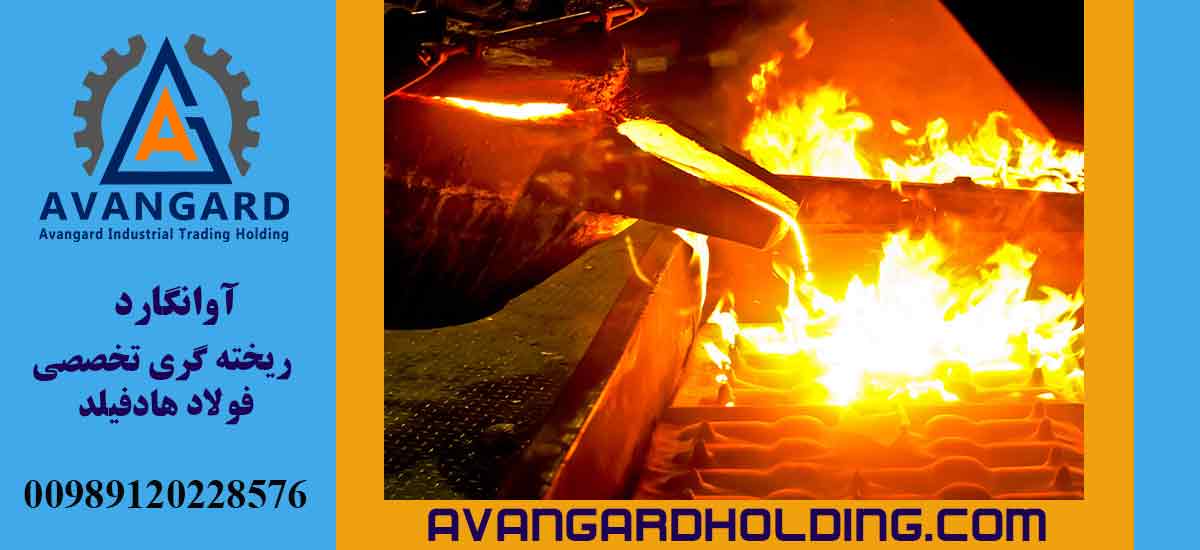
Casting Hadfield Steel (Manganese Steel Casting)
Casting Hadfield or manganese steel requires special techniques and strict standards due to the alloy’s sensitivity to cracking and distortion. The main steps of the process include:
-
Mold Design and Modeling: Proper mold design is essential to accommodate high thermal expansion and the unique behavior of this steel. Using high-quality refractory materials ensures the final product quality.
-
Melting: Melting is performed using electric arc or induction furnaces. Precise temperature control is essential to prevent oxidation and achieve proper alloy composition.
-
Casting: After preparing the molten steel, the casting of manganese steel (Hadfield steel) is carried out in molds. The resulting parts require controlled cooling to prevent cracking and structural defects.
-
Heat Treatment: To enhance strength and mechanical properties, cast manganese parts (Hadfield castings) undergo appropriate heat treatment, including rapid quenching after high-temperature heating.
-
Machining and Finishing: Due to the high hardness of Hadfield steel, machining is challenging and often requires specialized equipment and tools.
Structure of Hadfield Steel
The microstructure of Hadfield steel is austenitic manganese steel. The high manganese content (approximately 12–14%) and carbon (about 1–1.4%) in its chemical composition produce this austenitic microstructure. This structure gives manganese steel very high hardness and wear resistance.
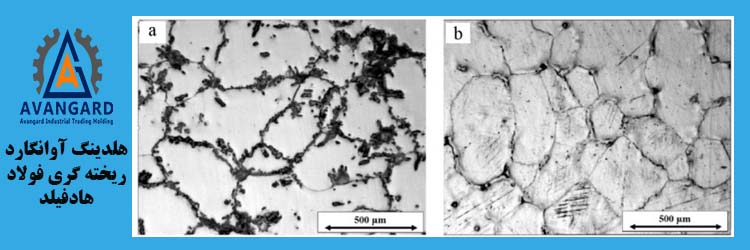
Due to microstructural changes under heat treatment, studies on Hadfield steel show that iron-manganese carbides ((Fe,Mn)₃C) in the initial structure form a continuous network along austenite grain boundaries. These carbides are brittle and can create mechanical weak points, leading to cracks and reduced strength (Figure 1a). However, heat treatment at 1100°C followed by rapid water quenching dissolves these carbides into the austenite, producing a more uniform structure (Figure 1b).
Despite significant progress in improving the mechanical properties of Hadfield steels, research continues to develop new manganese steel microstructures with higher performance for industrial applications.
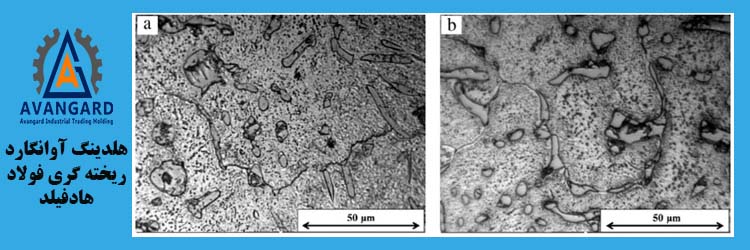
For example, a study on austenitic Hadfield steels containing vanadium carbides shows that these alloys have a different microstructure. These carbides form instead of iron-manganese carbides due to vanadium’s high affinity for carbon. In these steels, (Fe,Mn)₃C carbides are significantly reduced and appear scattered, while vanadium carbides are less affected by heat treatment.
Microscopic studies indicate that increasing the carbon content in these steels changes the distribution and morphology of vanadium carbides from branched to more spherical and bulkier shapes. These changes lead to an improvement in the overall hardness of the structure.
In Figure 2a, the initial microstructure of Hadfield steel after casting is shown, while Figure 2b illustrates the result of heat treatment, showing the dissolution of carbides and the creation of a more uniform structure at the grain boundaries. These images demonstrate the limited effect of heat treatment on the distribution and morphology of vanadium carbides.
These findings highlight the importance of controlling chemical composition and heat treatment to optimize the mechanical properties of austenitic steels
The austenitic structure provides high deformability in this type of steel, allowing it to withstand severe impacts without fracturing. The analysis of manganese steel produced by Avangard Holding is under the careful supervision of experienced technical engineers, using the most effective chemical and microstructural analysis techniques to meet all the needs of industry professionals.
Price of Hadfield Steel or Manganese Steel
The exact pricing of parts made from manganese steel (Hadfield steel or manganese crusher steel) depends on several factors, including type of part, dimensions, weight, production process, and alloying additives. To purchase or order high-manganese steel components at the best price, it is essential to compare suppliers and different part models and conduct thorough research.
When evaluating and requesting price quotes for these components, consider factors such as the purpose of the part, intended application, budget, and project requirements. This ensures an informed purchase aligned with your needs and investment.
Avangard Holding, with two decades of experience in production, design, and specialized casting, proudly offers a wide range of diverse parts made from manganese steel and molybdenum-alloyed manganese steel, helping to address the challenges of industry professionals.
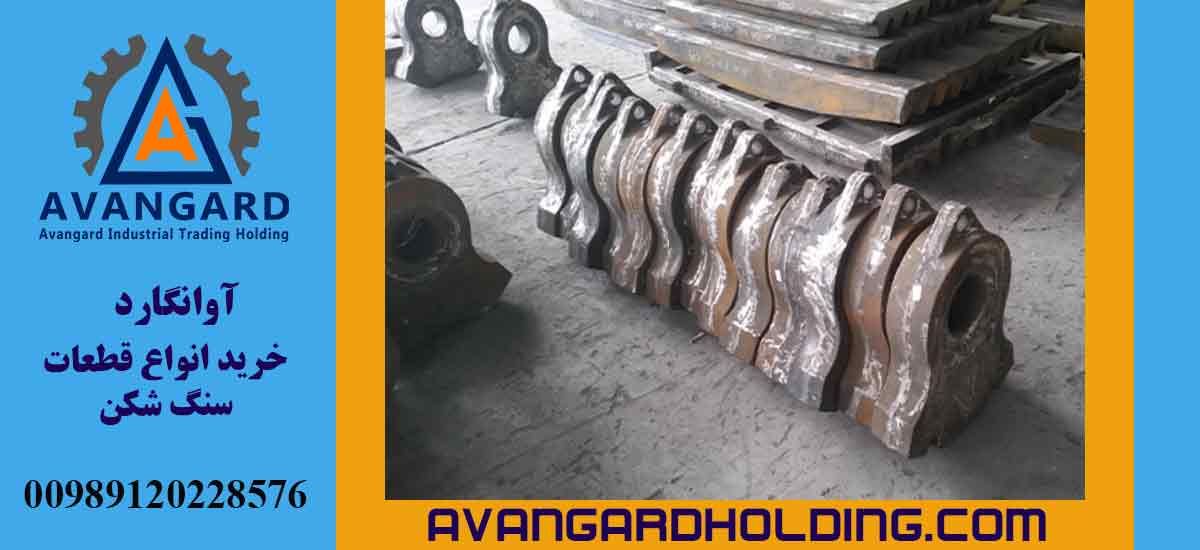
Advantages of Using Hadfield Steel in Various Industries
One of the greatest advantages of Hadfield steel is its high wear resistance, which results from its work-hardening property. In environments where industrial parts are continuously exposed to wear and impact, manganese steel provides optimal performance due to its increasing surface hardness.
This steel is particularly used in crusher industries, road construction machinery, heavy equipment manufacturing, and railway industries. Its corrosion and impact resistance make it an ideal choice for harsh industrial environments.
The use of Hadfield steel in manufacturing components such as gears, train rails, and crusher parts demonstrates the alloy’s flexibility. These features make various industries view this alloy as a solution for improving productivity and reducing costs.
Welding Hadfield Steel (Challenges and Solutions)
Welding Hadfield steel or manganese steel requires special techniques due to its austenitic structure and manganese content, which provide high resistance to wear and impact but also increase the risk of cracking in the heat-affected zone and sensitivity to structural changes.
Key considerations for welding Hadfield steel include:
-
Preheating and Post-heating: Manganese increases hardness during cooling after welding. Rapid cooling can cause cracks, making preheating and post-heating essential.
-
Use of Suitable Electrodes: Electrodes with similar composition (high manganese content) or wear-resistant electrodes are recommended.
-
Heat Control: Precise heat management during welding is crucial to prevent microstructural changes and preserve mechanical properties.
-
Short Weld Passes: Using short welds with cooling intervals between passes prevents heat accumulation.
Welding this alloy is widely applied in maintenance and repair of liners, jaw crusher parts, hydrocone crusher components, impact crusher parts, sand-making machine components, and industrial rails. Precise control of the welding process extends component life and prevents failures caused by cracking.
Welding Hadfield Steel
Welding Hadfield steel requires special knowledge and equipment due to its unique chemical composition and mechanical properties. Using appropriate techniques, these challenges can be effectively managed, allowing industries to take full advantage of the exceptional benefits of this alloy in heavy industries. Technical experts and engineers at Avangard Holding utilize the most advanced technology for welding and cutting components made of Hadfield steel.
Industrial Applications of Hadfield Steel
The applications of Hadfield steel are extensive due to its exceptional properties. Some of the key uses of manganese steel or manganese-alloyed steel include:
-
Mining Industry: High-manganese steel is used in the production of crusher parts, mechanical shovels, excavators, and other mining machinery components. In some cases, manganese steel is also used for teeth and undercarriage parts.
-
Construction Industry: Used in building bridges, durable structures, and impact-resistant constructions.
-
Transportation Industry: Manufacturing of rails, locomotives, and related components.
The unique features of this steel, such as high corrosion and impact resistance, make it ideal for harsh industrial environments. Its chemical composition and high mechanical strength make Hadfield steel one of the most widely used alloys in heavy industries.
Heat Treatment of Hadfield Steel
Due to its unique chemical composition and mechanical properties, Hadfield steel exhibits high resistance to wear and impact. Heat treatment plays a key role in optimizing its mechanical properties, helping to maintain a balance between hardness and toughness. Heat treatment significantly affects grain size, hardness, and wear resistance in Hadfield steel.
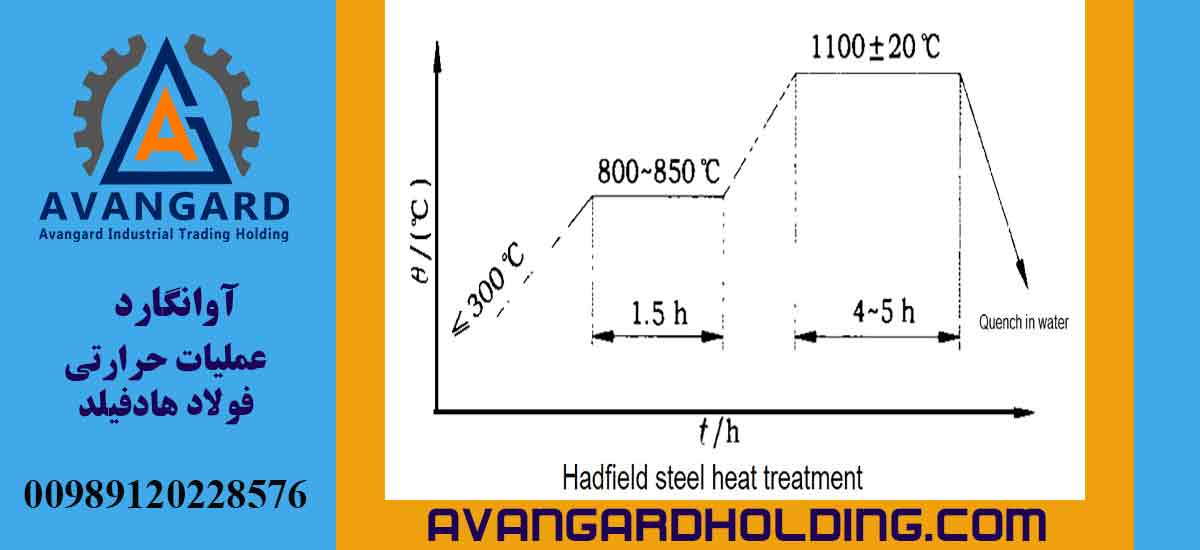
Heat Treatment Process
Austenitizing:
Manganese steel is heated to 1000–1100°C to achieve a homogeneous austenitic structure. This process increases the alloy’s toughness and ductility.
Rapid Cooling (Quenching):
After austenitizing, the steel is rapidly cooled in water or oil. This quick cooling prevents carbide formation and preserves the austenitic structure.
Stress Relief:
Stress relief operations are essential to prevent cracking during use or welding of components.
Hadfield Sheet
Hadfield sheets, an alloy of steel and manganese, are known as champions of wear resistance. This unique steel, with high toughness and ductility, resists severe impact and abrasion, significantly extending the service life of equipment. These steel giants are used in industries such as mining, road construction, cement production, and others, for parts exposed to heavy wear and impact.
Advantages and Disadvantages of Hadfield Steel
Advantages:
-
High Wear Resistance: Due to its austenitic structure, Hadfield steel offers exceptional wear resistance.
-
Impact Resistance: Can absorb severe impacts, making it ideal for crushers.
-
Good Ductility: Despite its high hardness, high-manganese steel can be shaped and processed easily.
-
Corrosion Resistance: Provides good resistance to corrosion, extending the service life of components.
Disadvantages:
-
High Production Cost: Due to expensive alloying elements and complex production processes.
-
Difficult Machining: High hardness makes machining challenging, requiring specialized tools and techniques.
-
Complex Welding: Requires special welding techniques and materials due to its unique structure.
Machining Hadfield Steel
Machining Hadfield steel poses challenges due to its high hardness and wear resistance:
-
Use of Hard Tools: Cutting tools made of tungsten carbide or ceramic are recommended.
-
Proper Lubrication: Use suitable lubricants to reduce friction and extend tool life.
-
Low Cutting Speeds: Machining at lower speeds is advised to prevent overheating and tool damage.
Conclusion
Hadfield steel, due to its high resistance to wear and impact, high hardness and strength, and corrosion resistance, is one of the most important materials used in the crusher industry. Understanding its production processes, welding, and machining can help increase efficiency and reduce costs.
Additionally, considering the environmental impact of steel production, using optimized and sustainable methods can contribute to environmental protection. Finally, with continued research and development of new technologies, Hadfield steel is expected to maintain a vital role in various industries and find even broader applications.
Avangard Industrial Trading Holding Company
Phone: +989120228576
Website: en.Avangardholding.com


