 فارسی
فارسی  Arabic
  Russian

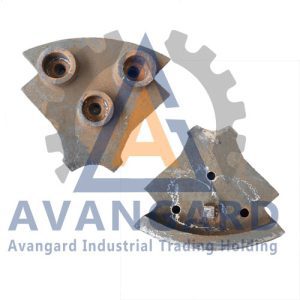
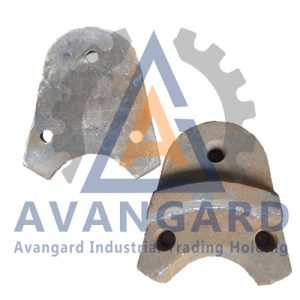
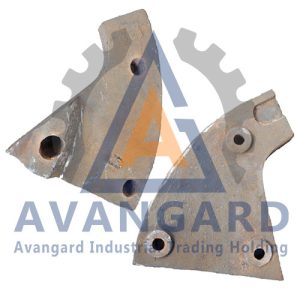
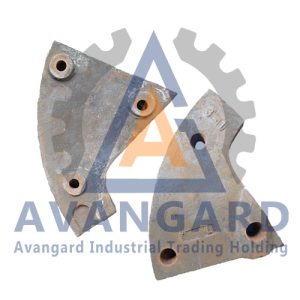
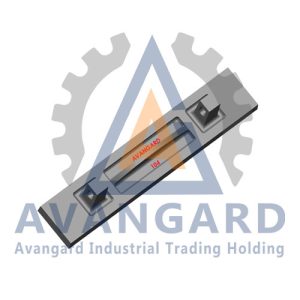
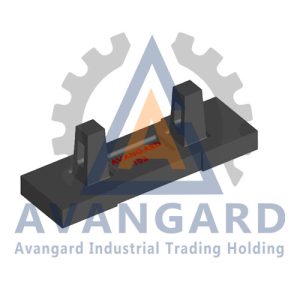
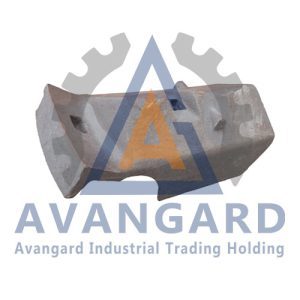
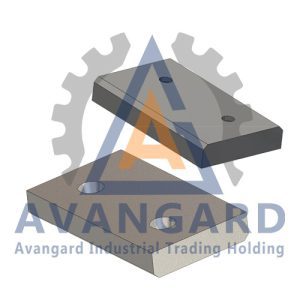

Austenitic stainless steel is a type of non-magnetic steel characterized by its high chromium and nickel content, combined with a relatively low carbon level. These properties have made it the most widely used grade of stainless steel. The most common type is stainless steel containing 18% chromium and 8% nickel, commonly referred to as 18/8 stainless steel. However, it is important to note that austenitic stainless steel is not limited to a single grade; it encompasses a variety of types with different alloying elements and properties.
The term stainless steel broadly refers to a category of iron-based alloys that contain chromium. There are over 100 different stainless steel grades, each varying in chromium, nickel, molybdenum, and other alloying elements. Every grade is engineered for specific applications and offers its own advantages and limitations.
Austenitic stainless steels are generally divided into two main groups: the AISI 300 series (chromium-nickel) and the 200 series (chromium-nickel-manganese). By adding 2–3% molybdenum, corrosion resistance is further enhanced, and such steels are sometimes referred to as acid-resistant stainless steels. Among them, grade 304—containing approximately 18% chromium and 8% nickel—is the most widely used austenitic stainless steel, with extensive applications across multiple industries.
One of the key reasons behind the popularity of Avangard’s austenitic stainless steel is its excellent formability, high resistance to impact and corrosion, and notable resistance to creep and scaling. In certain austenitic stainless steels, high levels of work hardening occur; in such cases, the austenite structure becomes unstable and partially transforms into martensite upon cooling, which increases the surface hardness of the steel.
Advantages of Avangard Austenitic Stainless Steel
Avangard’s austenitic stainless steel contains a minimum of 10.5% chromium and 8–12% nickel, along with nitrogen, carbon, and a variety of other alloying elements in solid solution. Chromium plays a crucial role in enhancing corrosion resistance, while nitrogen helps prevent surface embrittlement.
The key advantages of austenitic stainless steel include:
- High corrosion resistance: Compared to low-nickel chromium steels, austenitic stainless steel offers significantly greater resistance to corrosion, particularly against stress corrosion cracking.
- Non-magnetic properties: Austenitic steel is primarily non-magnetic and does not exhibit ferromagnetism.
- Excellent strength profile: With low yield strength but high tensile strength, it is highly suitable for structural applications.
- High thermal expansion coefficient: This property ensures reliable performance under fluctuating temperature conditions.
- Superior weldability: Welding operations can be performed easily without reducing its mechanical properties.
Thanks to these characteristics, Avangard’s austenitic stainless steel is considered an ideal choice for industrial applications, construction, and corrosion-resistant equipment.
History of Avangard Austenitic Stainless Steel
Stainless steels were first introduced in 1908 by a German metallurgist named Monnartz. He discovered the phenomenon of passivation in Fe-Cr alloys and demonstrated that increasing chromium content to 12% imparted a “stainless” property to the alloy.
Subsequently, further research was carried out by two German engineers, Mauer and Strauss, on Cr-Ni-Fe alloys. Their work led to the first patent for nickel-containing stainless steels in 1912. This innovation marked the beginning of austenitic stainless steel.
Today, Avangard’s austenitic stainless steel, produced with the classic composition of 18% chromium and 8% nickel—known as grade 304L—remains the most widely used type of stainless steel worldwide, serving diverse industrial applications across multiple sectors.
Chemical Composition and Alloying Elements of Avangard Austenitic Stainless Steel
The unique properties of Avangard’s austenitic stainless steel—such as high strength and exceptional corrosion resistance—are the result of a carefully balanced combination of alloying elements within its structure. This steel is composed of several key elements, each serving a specific role in its performance:
- Iron (Fe): The base metal of austenitic steel, making up 50–80% of its chemical composition.
- Chromium (Cr): Added in the range of 16–26%, chromium forms a protective oxide layer on the steel surface, significantly enhancing its corrosion resistance.
- Nickel (Ni): The primary alloying element, usually between 8–20%, responsible for stabilizing the austenitic structure at room temperature.
- Manganese (Mn): Present up to 10%; manganese improves strength, corrosion resistance, and helps maintain the austenitic phase.
- Nitrogen (N): Added in small amounts (0.1–0.4%) to increase both strength and corrosion resistance.
- Carbon (C): Typically kept low, below 0.08%, to prevent carbide formation and preserve corrosion resistance.
- Molybdenum (Mo): In certain 300-series steels such as grade 316, 2–3% molybdenum is added to improve resistance to pitting corrosion.
- Copper (Cu): Between 1–4% copper may be included to enhance atmospheric corrosion resistance and mechanical strength.
- Other alloying elements: Small amounts of silicon, phosphorus, and sulfur are also present, contributing to improved strength and workability.
This balanced composition makes Avangard’s austenitic stainless steel an ideal choice for industrial, structural, and corrosion-resistant applications, even in highly aggressive environments.
Microstructure of Avangard Austenitic Stainless Steel
Stainless steels are a group of high-alloy steels designed based on Fe-Cr, Fe-Cr-Ni, and Fe-Cr-C systems. Among them, Avangard’s austenitic stainless steels hold particular importance, with wide-ranging applications across various industries and environments.
These steels are recognized as weldable materials; however, in order to ensure defect-free production and optimal performance, strict adherence to manufacturing standards and guidelines is essential. During short-term or long-term exposure to elevated temperatures, Avangard’s austenitic stainless steels may undergo microstructural changes.
Microstructural stability is a key requirement for maintaining both the mechanical properties and corrosion resistance of austenitic steels. To achieve a stable microstructure, these steels are subjected to controlled heat treatment processes. Annealing is typically performed in the temperature range of 700–1100 K, during which secondary phases may form—such as matrix austenite with an f.c.c. crystal structure and δ-ferrite as an upper secondary phase precipitate.
This process enhances the stability of mechanical properties and increases the corrosion resistance of Avangard’s austenitic stainless steels, ensuring reliable performance in demanding applications.
Crystal Structure and Mechanical Properties of Avangard Austenitic Stainless Steel
Avangard’s austenitic stainless steels are characterized by their face-centered cubic (FCC) crystal structure. This structure forms when sufficient amounts of austenite-stabilizing elements—such as nickel, manganese, carbon, and nitrogen—are added to the iron-chromium alloy.
In their initial state, Avangard’s austenitic steels can be produced with very low hardness, featuring a yield strength of around 200 MPa. Through cold working, however, their strength can be increased by up to tenfold. Unlike ferritic alloys, austenitic steels retain ductility even at very low temperatures while also maintaining strength at elevated temperatures.
The corrosion resistance of Avangard’s austenitic stainless steels is highly versatile, ensuring reliable performance in applications ranging from everyday use to highly demanding environments such as seawater exposure. These combined properties make Avangard’s austenitic stainless steel an ideal choice for critical industries and corrosive environments.
Limitations and Mechanical Properties of Avangard Austenitic Stainless Steel
Despite the advantages of austenitic steels over ferritic alloys, they exhibit certain limitations. Austenitic steels generally have lower resistance to oxidation and are more sensitive to stress corrosion cracking. In addition, their endurance limit is lower than that of ferritic steels, which means they are more susceptible to fatigue-related failure.
The table below presents selected mechanical properties of some common grades of Avangard’s annealed austenitic stainless steels:
| Grade | Composition | Elastic Modulus | Yield Strength | Elongation | Tensile Strength |
| AISI 201 (Annealed) | Fe 67.5–75%, Cr 16–18%, Mn 5.5–7.5%, Ni 3.5–5.5%, S 0–0.03% | 200 GPa | 310 MPa | 46.00% | 660 MPa |
| AISI 205 (Annealed) | Fe 62.6–68.1%, Cr 16.5–18.5%, Mn 14–15.5%, Ni 1–1.7%, N 0.32–0.4% | 200 GPa | 460 MPa | 40.00% | 810 MPa |
| AISI 301L (Annealed) | Fe 70.7–78%, Cr 16–18%, Ni 6–8%, S 0–0.03%, Si 0–1% | 200 GPa | 250 MPa | 52.00% | 630 MPa |
| AISI 303 (Annealed) | Fe 66.4–74.9%, Cr 17–19%, Ni 8–10%, S 0.15–0.35%, Si 0–1% | 200 GPa | 240 MPa | 52.00% | 620 MPa |
| AISI 304L (Annealed) | Fe 64.8–74.5%, Cr 17.5–20%, Ni 8–12%, S 0–0.03%, Si 0–1% | 200 GPa | 210 MPa | 40.00% | 550 MPa |
| AISI 316 (Annealed) | Fe 62–72%, Cr 16–18.5%, Ni 10–14%, Mo 2–3%, C 0–0.08% | 200 GPa | 290 MPa | 50.00% | 580 MPa |
Applications of Avangard Austenitic Stainless Steel
Avangard’s austenitic stainless steels—particularly grades 304 and 316—are widely used across a broad range of industries, from small consumer goods to large-scale industrial projects. Their excellent corrosion resistance and strong mechanical performance make them a versatile and durable choice.
Depending on the application, these steels can be shaped into desired forms through processes such as casting, which is both cost-effective and efficient.
The most common applications of Avangard austenitic stainless steels include:
- Kitchenware and utensils: Sinks, pots, pans, and other stainless-steel cookware manufactured using grades 304 and 316.
- Architecture and construction: Cladding, railings, façades, and outdoor structures. For example, the exterior of the Gateway Arch in St. Louis, USA, was constructed using 304 stainless steel.
- Food processing industry: Tanks and processing equipment requiring high corrosion resistance. Grade 316L is especially valuable in this sector due to its resistance to pitting corrosion.
- Marine applications: Boat propellers, offshore platforms, and equipment exposed to seawater, where grade 316 provides outstanding resistance to marine corrosion.
- Medical equipment and implants: Surgical instruments and medical implants, valued for their corrosion resistance and biocompatibility.
- Automotive parts: Exhaust systems and decorative automotive components.
- Luxury consumer goods: Watch cases, jewelry, and other high-quality stainless-steel items.
With this wide range of applications and superior durability, Avangard’s austenitic stainless steel is considered an ideal choice for industries and products that demand strict performance standards.
Avangard Austenitic Stainless Steel – The Preferred Choice for Diverse Industrial Applications
In this article, we explored Avangard’s austenitic stainless steel. In addition to its outstanding mechanical and physical properties, this steel offers an attractive appearance, ease of manufacturing, and low maintenance requirements. Avangard’s austenitic steels are also fully environmentally compatible, making them an ideal choice for producing components across various industries, including construction, automotive, medical equipment, food processing, and consumer goods.
Leveraging advanced workshops and equipment for modeling, casting, and machining, Avangard is able to provide comprehensive austenitic stainless steel casting and supply services for a wide range of industrial applications. For more information or specialized consultation regarding Avangard’s austenitic stainless steel, please contact our team.
🏢 Avangard Industrial Trading Holding Company – A pioneer in supplying and manufacturing casting parts in the Middle East 🌍 📞 Phone: +98 912 022 8576 🌐 Website: En.Avangardholding.com


