فارسی
فارسی  العربية
  Русский
  Azərbaycan

In the casting industry and the production of heavy steel castings)Cast Components(, accurate evaluation of mechanical properties is not merely a laboratory requirement; it serves as a cornerstone for ensuring the performance, safety, and durability of components under demanding operating conditions. ASTM A370 is one of the most recognized international references for mechanical testing methods of steel, providing a precise framework for measuring and interpreting the mechanical behavior of carbon, alloy, and stainless steels.
This standard is designed to produce repeatable, comparable, and contractually reliable results, and is widely employed by manufacturers, quality control laboratories, and heavy industries. Strict adherence to ASTM A370 in industrial casting operations directly contributes to enhanced customer confidence and reduced risk of component failure.
Scope and Structure of Tests in ASTM A370
The ASTM A370 standard covers four main categories of mechanical tests:
- Tension Test – Evaluates the material’s response to axial tensile stress.
- Bend Test – Assesses the ductility and soundness of the material under bending conditions.
- Hardness Testing – Measures the resistance of the steel to permanent deformation.
- Impact Test – Determines the material’s toughness and ability to absorb energy during sudden loading.
Each of these tests is designed to examine a specific aspect of the steel’s mechanical behavior, and together they provide a comprehensive picture of material performance.
1. Tension Test: The Foundation for Steel Mechanical Behavior Analysis
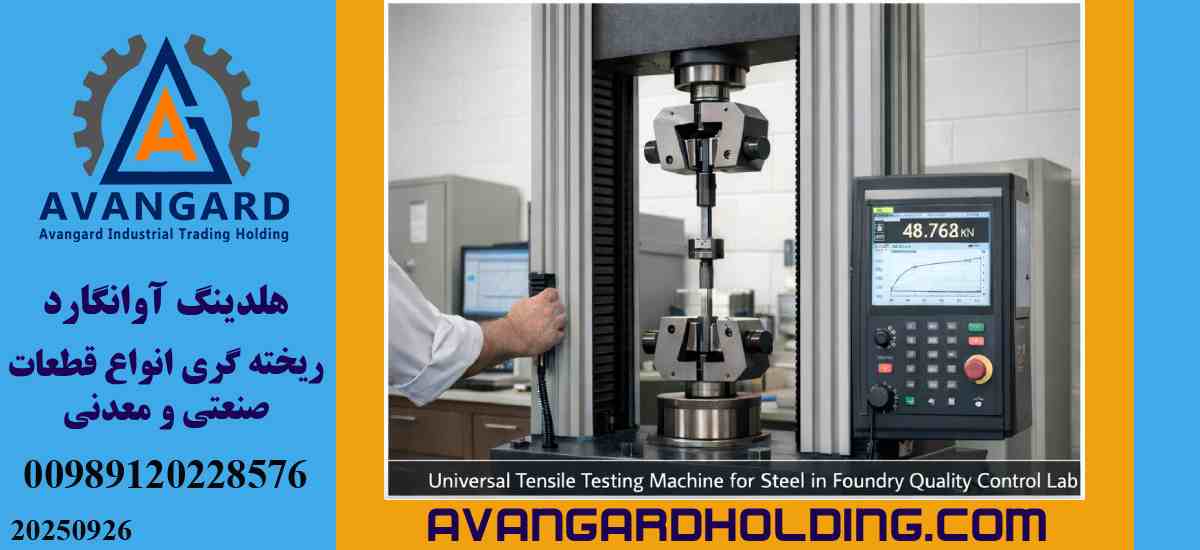
The tension test is the most important and fundamental mechanical test in the steel industry. In this method, a specimen is subjected to axial loading until failure, allowing the extraction of key parameters:
- Ultimate Tensile Strength (UTS)
- Yield Strength
- Elongation Percentage
- Reduction of Area
- Modulus of Elasticity
The ASTM A370 standard describes the execution of the tension test by referencing ASTM E8/E8M, specifying the following requirements:
- Application of fully axial load
- Precise control of test speed
- Calibration of testing equipment in accordance with ASTM E4
- Correct specimen orientation (longitudinal, transverse, radial, or tangential)
In the casting industry, tension test results indicate whether a component can withstand operational stresses in mining, cement plants, crushing lines, and other heavy-duty applications.
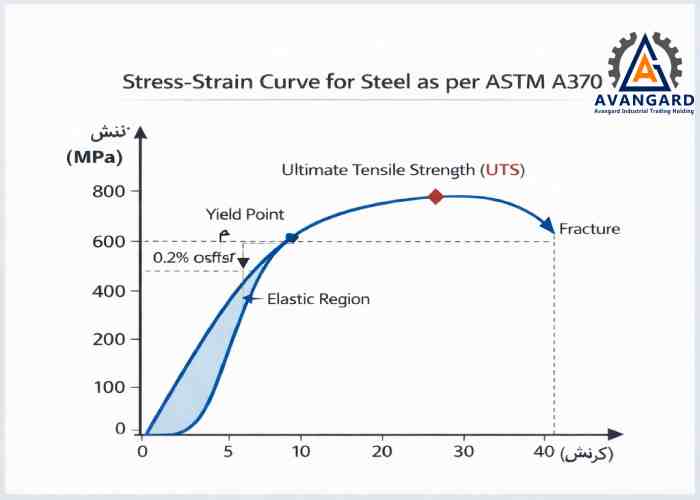
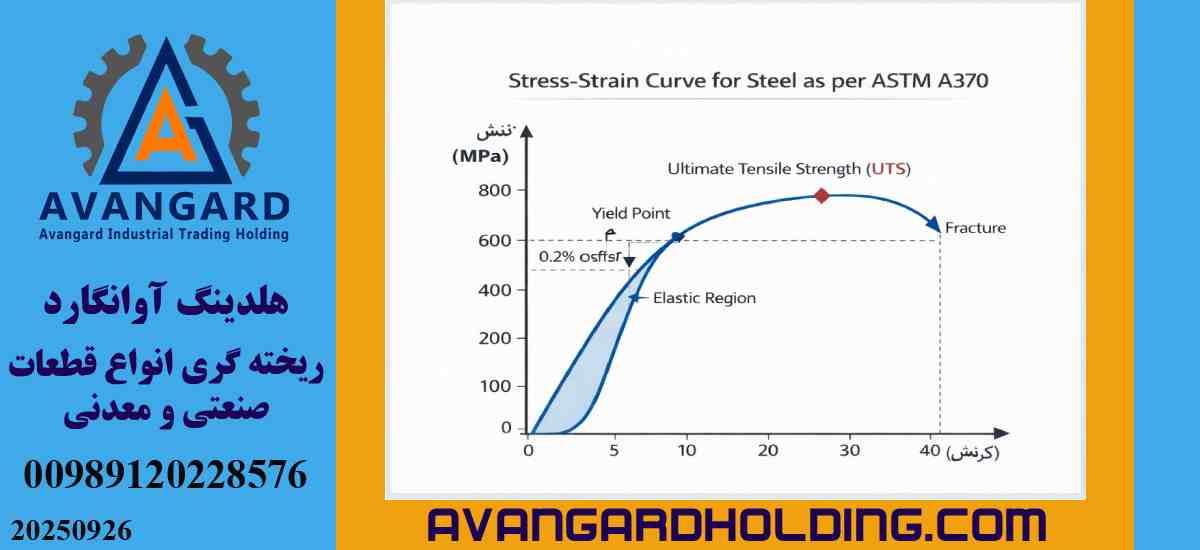
Stress-Strain Curve and Determination of Yield Strength
For steels with a well-defined yield point, the following methods are used to determine it:
- Drop-of-needle method
- Autograph curve method
- 0.2% Offset method
The offset method is particularly important for steels without a distinct yield point, as it allows for more precise comparison of materials.
2. Hardness Test: An Indicator of Wear Resistance
Hardness represents the surface’s resistance to penetration and is critically important for wear-resistant components such as Crusher Machine, anvils, and side supports.
The main methods specified in the standard include:
- Brinell Test in accordance with ASTM E10
- Rockwell Test in accordance with ASTM E18
- Leeb Portable Hardness Test in accordance with ASTM A956
In manganese steels, the initial hardness is low, but it increases significantly due to work hardening. Therefore, hardness test results must be interpreted alongside metallurgical behavior.
Hardness-to-Tensile Strength Conversion
ASTM A370 provides Hardness Conversion Tables, which allow the conversion of Rockwell values to Brinell or estimation of tensile strength. However, it should be emphasized that these conversions are approximate and should not be used as definitive criteria for acceptance or rejection of a product.
3. Impact Test: Analyzing Behavior under Dynamic Conditions
For components subjected to sudden loads or low-temperature service, impact resistance is critically important. This test is performed in accordance with ASTM E23.
In the Charpy test, the energy absorbed until fracture is measured. A low absorbed energy value may indicate brittleness or improper microstructure. In mining industries and impact-prone components, this test helps prevent sudden and catastrophic failures.
4. Bend Test: Evaluating Ductility
The bend test is used to assess the material’s ability to undergo plastic deformation without cracking. This test is primarily applied to rolled products, reinforcing bars, and certain forged components, providing insight into the integrity of the internal structure and confirming the absence of surface cracks.
Comprehensive Comparison Table of Mechanical Tests
| Test Type | Primary Objective | Measurable Parameter | Application in Industrial Casting |
| Tension | Determine overall strength | UTS, Yield, Elongation | Components under stress |
| Brinell Hardness | Surface resistance | HBW | Wear-resistant components |
| Rockwell Hardness | Quick production control | HRC | Production line inspection |
| Charpy Impact | Behavior under sudden loads | Absorbed Energy (J) | Impact-prone components |
| Bend | Ductility assessment | Presence or absence of cracks | Rolled products |
Factors Affecting Test Results
Mechanical test results can be influenced by the following factors:
- Heat treatment (quenching, tempering, normalizing)
- Microstructural characteristics
- Chemical inhomogeneity
- Residual stresses
- Environmental conditions, such as corrosion or service temperature
The standard emphasizes that result interpretation must be carried out with a full understanding of the component’s production and service conditions.
Importance of ASTM A370 in Advanced Casting Industry
For companies active in steel casting and raw material supply, strict implementation of ASTM A370 provides the following benefits:
- Enhanced component reliability
- Reduced return rates
- Extended equipment service life
- Facilitated export compliance
- Increased technical credibility of the brand
In today’s competitive market, having test certification in accordance with ASTM is not only a technical requirement but also a powerful marketing tool.
Final Summary
ASTM A370 serves as a comprehensive scientific reference for mechanical testing of steel, providing a precise framework for evaluating component performance. In the industrial casting sector, strict adherence to this standard ensures quality, safety, and durability of components under demanding service conditions.
Compliance with these requirements bridges the gap between materials engineering knowledge and practical equipment performance, paving the way for the production of high-quality, export-oriented components.
🏢 Avangard Industrial Trading Holding Company – A pioneer in supplying and manufacturing casting parts in the Middle East 🌍
📞 Phone: +98 912 022 8576
🌐 Website: En.Avangardholding.com