 فارسی
فارسی  العربية
  Русский
  Azərbaycan




Ready to send

Immediate shipment of the product is possible.


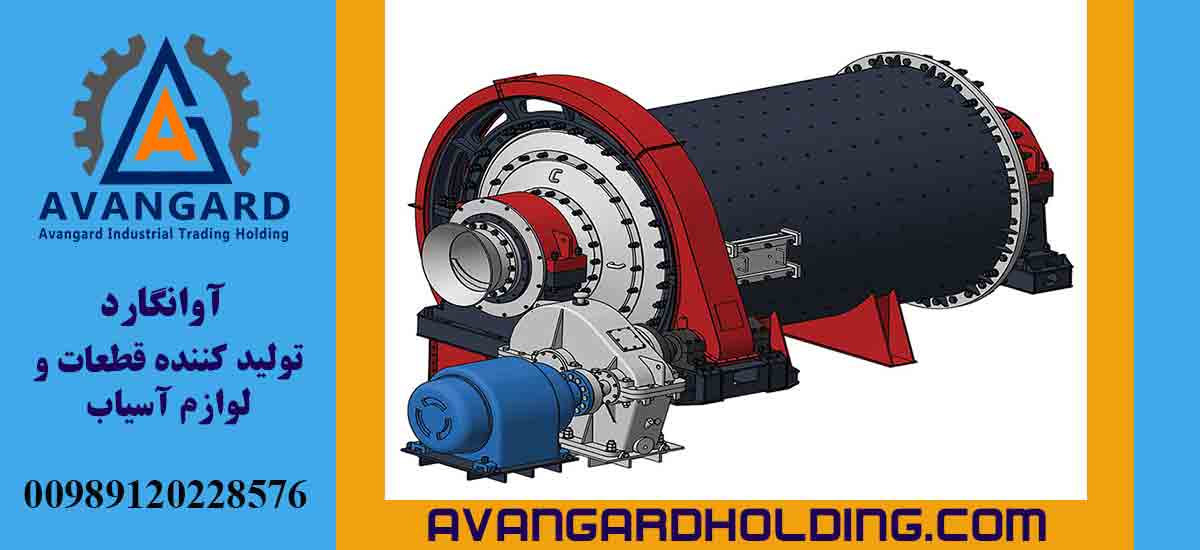
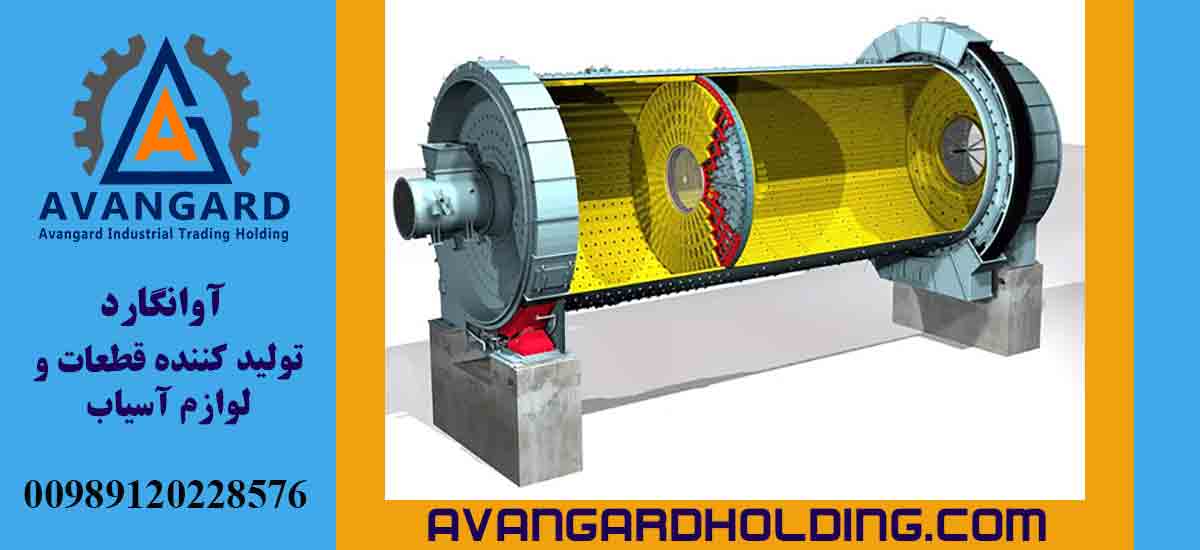
Ball Mill (Ball Mill) is one of the most important and widely used pieces of equipment in mineral processing and sand mining, designed for grinding and pulverizing hard materials. This cylindrical device rotates continuously, setting in motion steel, alloy cast iron, or industrial ceramic balls, whose collisions with the material result in fine particle size reduction.
In ball mills, the grinding process can be performed either dry or wet. This machine is used in various industries such as mining, cement, metallurgy, ceramics, and chemicals. Due to its ability to grind materials into very fine sizes, it is an essential part of many production lines.
The main features of ball mills include high efficiency, the ability to grind materials to sizes below 0.3 mm, a variety of grinding media materials, and custom design according to customer needs. The machine is capable of processing large volumes of materials and is ideal for fine powdering and uniform mixing of hard substances.
Avangard Group, leveraging its expertise in specialized casting and reverse engineering, is capable of producing various types of wear-resistant and customized ball mill components at the highest quality. The holding company is a pioneer in designing and manufacturing custom ball mills and has become one of the leading suppliers of this equipment in Iran.
For more information and professional consultation regarding ball mill purchase, customized production, and wear-resistant components, you can contact Avangard.
How Does a Ball Mill Work?
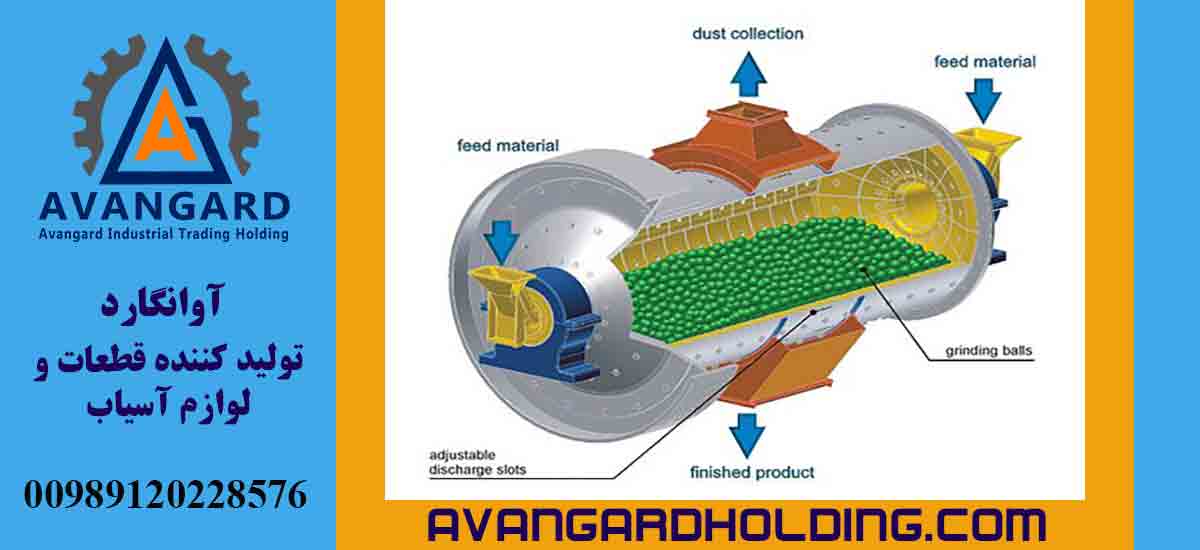
A Ball Mill is a rotating cylindrical device that operates based on the principle of impact and attrition between the balls and the input material. The machine consists of a metal cylinder mounted on bearings and driven by an electric motor and gearbox. The inside of the cylinder is filled with grinding balls made of various materials such as hardened steel, wear-resistant steel, alloyed cast iron, or industrial ceramics.
As the cylinder rotates, the balls are lifted by centrifugal force and friction, then fall back down. This falling motion causes impact and pressure on the material inside the mill, breaking it into finer particles. At the same time, the collisions between the balls lead to abrasion, resulting in a complete grinding and milling process.
The operation can be performed in two modes — wet grinding and dry grinding. In wet grinding, water or other liquids are used to improve efficiency and reduce dust generation. The rotation speed, ball volume, feed type, and internal design of the mill are all factors that influence its efficiency and the quality of the final product.
Application of Ball Mill in the Mining and Metallurgy Industry
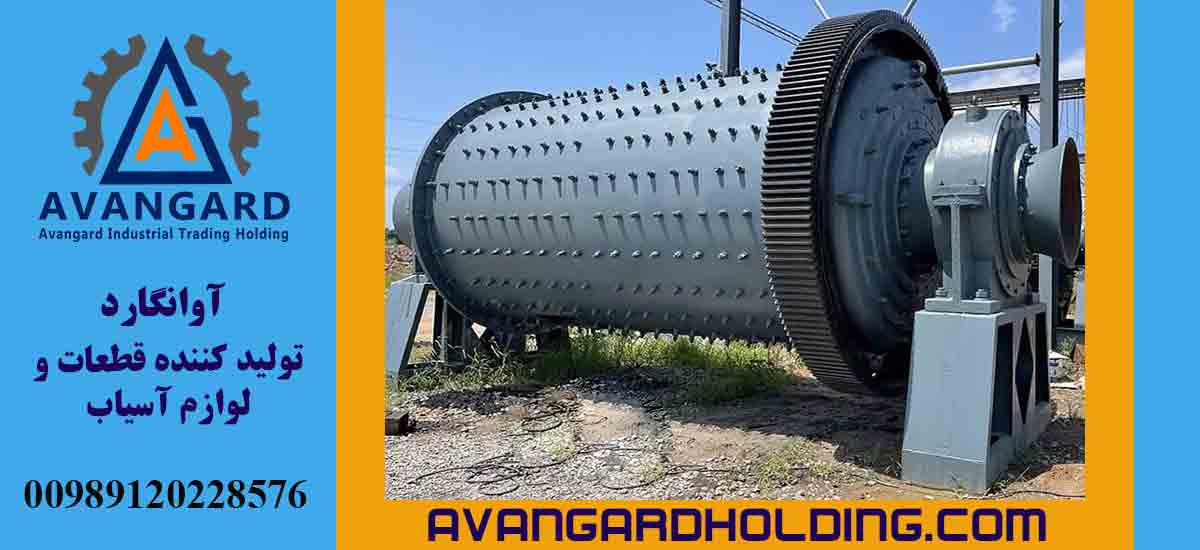
The Ball Mill is one of the key pieces of equipment in the mining, metallurgy, and raw material processing industries. In mining operations, it is used for grinding and crushing hard ores such as iron, copper, gold, barite, silica, and other hard stones. In the metallurgical industry, the ball mill plays a vital role in preparing raw materials for melting and metal alloying. It is also used in the production of alloy powders, mineral additives, and chemical compounds.
The Ball Mill is considered one of the most essential and widely used machines in mineral processing and extractive metallurgy. It is employed in mining production lines to grind and reduce the size of ores such as iron, copper, gold, lead, zinc, barite, silica, chromite, and other hard minerals.
The grinding process in a ball mill is designed to reduce the materials to micron-sized particles, preparing them for subsequent stages such as flotation, leaching, or concentration.
The Role of Ball Mill in the Metallurgical Industry
In the metallurgical industry, the Ball Mill plays a crucial role in the preparation of metal powders, the preparation of raw materials for induction or electric arc furnaces, and the production of special alloy and composite metal powders.
In this field, achieving uniform particle size and reducing metal surface oxidation is highly important — features that can be effectively achieved using a properly designed ball mill.
Ball mills, with the ability to adjust rotation speed, ball size, inner liner type, and the option to operate in dry or wet modes, are among the most versatile grinding machines in production lines. They can be used in both industrial-scale and pilot-scale operations.
Types of Ball Mills and Their Differences
Ball mills are classified into several types based on design and application:
-
Continuous Ball Mill
-
Batch Ball Mill
-
Dry Ball Mill
-
Wet Ball Mill
The main difference among these types lies in the method of material loading and discharge, as well as internal design. For example, continuous ball mills are used for large-scale production, while batch ball mills are more suitable for laboratory or small-scale manufacturing.
Continuous Ball Mill
A Continuous Ball Mill is an industrial type of mill that continuously feeds material into the machine while the ground material exits from the other end.
Unlike batch ball mills, it operates in a continuous process, allowing uninterrupted production.
This design is ideal for large industries and high-volume operations, as it enables high throughput and efficient material processing in a short period of time.
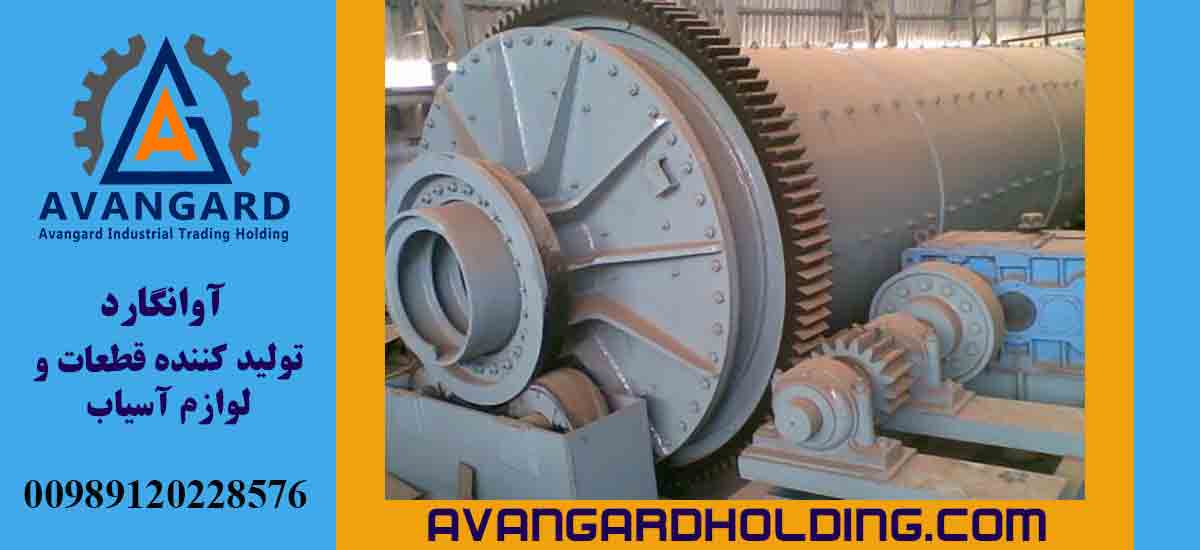
Operation of Continuous Ball Mill
The Continuous Ball Mill operates by feeding materials continuously from one end of the cylinder, where they collide repeatedly with steel or cast-iron balls as they move through the rotating drum. During this process, the materials are gradually crushed and ground, and the finished powder exits from the opposite end to proceed to the next production stage.
This type of mill is commonly used in cement plants, ceramic production, mineral powder processing, and metallurgical operations.
The main advantage of the Continuous Ball Mill compared to the Batch Ball Mill is that it does not require stopping or resetting during operation. It can function continuously without interruption, making it ideal for large-scale industries that demand constant and high-throughput production.
Batch Ball Mill
The Batch Ball Mill is another type of mill used in various industries, typically for small to medium-scale grinding operations. In this design, materials are loaded into the mill in batches. After the grinding process is completed, the finished product is fully discharged, and new material is added for the next cycle.
Each grinding cycle takes place over a defined period, and the process is repeated in intervals.
The operation of a Batch Ball Mill is similar to that of a continuous one, with the main difference being that the grinding occurs in a closed chamber. The input materials collide with steel, cast-iron, or ceramic balls under the forces of impact and attrition, leading to size reduction.
At the end of each cycle, the ground material is discharged, and the next batch begins.
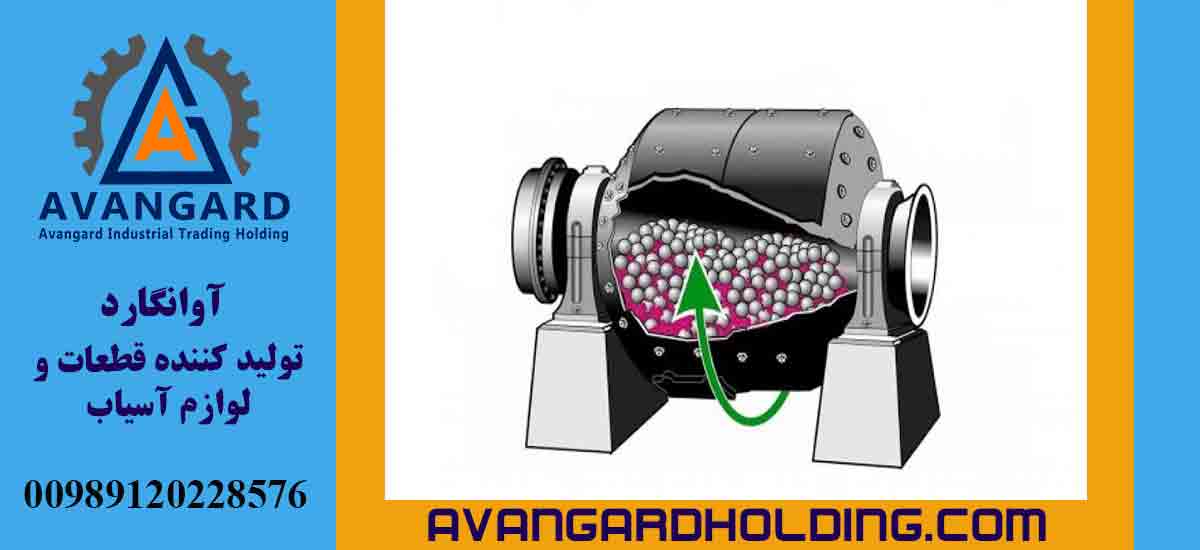
Main Features of the Batch Ball Mill:
-
Production Flexibility:
This type of mill is mainly used for small to medium-scale material production, allowing easy adjustment of milling parameters to meet specific process requirements. -
Precise Grinding Control:
Since materials are loaded and discharged separately, it provides better control over the grinding time and the type of feed material. -
Reduced Energy Consumption:
Optimized for smaller volumes, the Batch Ball Mill consumes less energy compared to continuous mills.
The Batch Ball Mill is ideal for industries requiring high precision and flexibility, such as pharmaceuticals, chemical production, ceramics, and laboratory-scale processes.
It is especially suitable for sensitive or specialized materials that need strict process control.
Dry Ball Mill
The Dry Ball Mill is an important type of industrial grinding equipment used for dry processing — without any liquids such as water or other solvents.
Unlike the Wet Ball Mill, this machine performs grinding without the addition of fluids.
The materials enter the drum dry and are reduced in size through impact and attrition between the balls and the inner lining of the mill.
Key Features of the Dry Ball Mill:
-
No Need for Water or Liquids:
Designed for dry processing — ideal for industries such as cement production, mineral powders, and special alloys. -
Higher Production Capacity:
Since no drying or liquid separation systems are required, the overall throughput is significantly increased. -
Fine and Uniform Particles:
Produces micron-sized powders essential for industrial and metallurgical processes. -
Suitable for Hard and Brittle Materials:
Commonly used for grinding iron ore, gypsum, barite, and silica.
Applications of the Dry Ball Mill:
-
Cement Industry: Grinding clinker and raw materials for cement production.
-
Metallurgy: Producing metal and alloy powders.
-
Ceramics: Preparing ceramic powders and raw materials for tiles and ceramics.
-
Mining: Grinding dry mineral ores and hard rocks.
-
Special Alloys: Milling and blending of alloy compositions.
The dry ball mill works by rotating the drum where materials collide with the grinding balls.
Rotation speed, drum length, and ball material are key factors that determine the mill’s efficiency and output.
Wet Ball Mill
The Wet Ball Mill is one of the most popular industrial types, designed for wet grinding of mineral and chemical materials.
In this system, along with steel, cast iron, or ceramic balls, a liquid medium (usually water) is added to the mill chamber.
The liquid helps the materials move more smoothly, enhances grinding efficiency, and prevents overheating or excessive wear of the balls and inner lining.
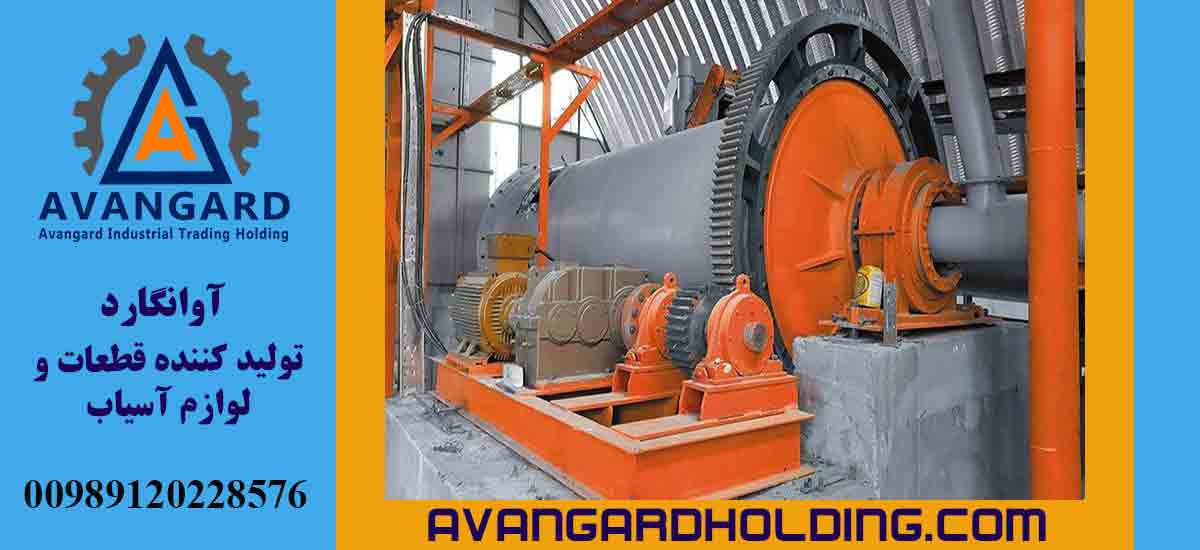
Main Features of the Wet Ball Mill:
-
Use of Liquids to Reduce Wear:
Adding liquids into the mill improves the grinding efficiency and prevents excessive heat generation during the process. -
Ideal for Wet Processes:
This mill is perfect for wet operations such as the production of mineral powders, flotation processes, and ore processing. -
Precise Particle Size Control:
Due to the wet nature of the process, the Wet Ball Mill can produce very fine and uniform particles. -
Increased Grinding Capacity:
The addition of liquid enhances the efficiency of material movement, leading to faster and more effective grinding—especially useful in high-capacity production lines.
Applications of the Wet Ball Mill:
-
Mining Industry:
Used for grinding ores such as copper, gold, iron, barite, and lead, either to produce mineral powders or to prepare materials for subsequent processes like flotation. -
Cement Industry:
Applied in grinding cement powders and raw materials for cement production. -
Ceramic Industry:
Used for grinding ceramic materials and producing uniform mixtures for tile and ceramic manufacturing. -
Chemical Industry:
For producing fine chemical powders, special alloys, and high-precision formulations. -
Pharmaceutical Industry:
Used to prepare pharmaceutical powders and active drug ingredients requiring precise particle control.
Operation of the Wet Ball Mill:
In this system, the materials are combined with liquids inside the mill chamber.
As the drum rotates, the grinding balls collide with the materials, initiating the grinding process.
Thanks to the presence of liquid, the Wet Ball Mill can reduce materials to ultra-fine particle sizes (below 0.1 mm) with high uniformity and reduced dust formation.
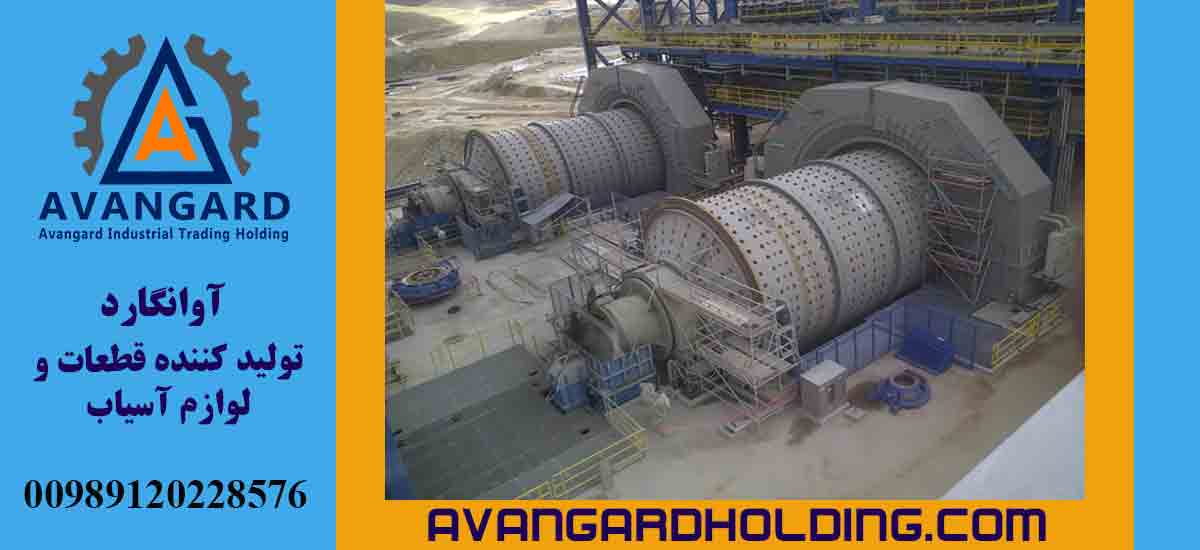
Casting and Production of Wear-Resistant Parts for Ball Mills
One of the key factors influencing the performance and durability of a ball mill is the quality of its wear parts.
At Avangard, specialized casting and precision engineering are used to produce components such as grinding balls, inner shells, liners, and shafts made from high wear-resistant alloys.
These parts are manufactured from alloyed cast iron, manganese steel, chrome steel, and hardened steel, offering exceptional durability and extended service life.
Ball mills are essential equipment across various industries, used for mineral grinding, chemical processing, and micronized powder production.
A major challenge in ball mill operation is intense wear of internal components, which gradually reduces performance.
To overcome this issue, wear-resistant parts are developed to increase lifespan and reduce maintenance costs.
1. Wear-Resistant Components in Ball Mills
In a ball mill, the parts most exposed to abrasion must be made from materials with high wear resistance.
These include:
-
Grinding Balls:
The main elements responsible for crushing materials. They must withstand repeated impacts and heavy abrasion.
They are commonly made from wear-resistant steels, alloy cast irons, or ceramics. -
Mill Walls:
The inner walls that come in contact with materials and balls require anti-wear linings due to heavy abrasion.
Typically, high-chrome cast irons or steel alloys are used. -
Inner Liners:
In high-pressure zones, wear-resistant coatings made from chromium and molybdenum alloys are applied to prevent erosion.
2. Materials and Alloys Used in Wear-Resistant Part Production
To ensure the durability of ball mill components, special materials and alloys are used that provide excellent resistance to abrasion and impact.
These include:
-
Hi-Chrome Cast Iron:
Known for its high chromium content, it offers excellent wear resistance — commonly used for mill walls and liners. -
Hardox Steel (Wear-Resistant Steel):
Extremely hard and durable, ideal for producing grinding balls and inner shells. -
Hardened Alloy Steels:
Specially heat-treated steels that deliver superior wear and impact resistance for heavy-duty applications. -
Wear-Resistant Ceramics:
In specific industries, ceramic balls made from alumina or similar compounds are used for applications requiring non-metallic grinding media and high chemical resistance.
3. Casting Process of Wear-Resistant Parts
Casting is the primary process for producing wear-resistant components. In this method, raw materials are poured into special molds, and after cooling, parts with specific properties are obtained. The main casting methods used for wear-resistant parts include:
-
Die Casting: Used for producing components with precise dimensions and smooth surfaces.
-
Sand Casting: Suitable for larger and more complex parts that require high strength.
-
Continuous Casting: This process enables continuous production of components with higher production rates.
4. Advantages of Using Wear-Resistant Parts in Ball Mills
The use of wear-resistant parts in ball mills offers numerous advantages, including:
-
Increased service life: Use of wear-resistant materials extends the lifespan of both components and the mill, reducing maintenance and replacement costs.
-
Reduced production costs: By minimizing frequent part replacements and improving mill efficiency, overall production costs are reduced.
-
Improved mill performance: Wear-resistant components enhance grinding performance and increase material throughput.
-
High resistance to harsh conditions: These parts can withstand extreme environmental conditions, such as high temperatures, pressure, and heavy abrasion.
Custom Manufacturing & Reverse Engineering Services by Avangard
Avangard Industrial Holding leverages the expertise of its engineering team and advanced technologies to provide comprehensive reverse engineering and custom ball mill design services. These services are tailored to meet the specific and precise needs of customers in industries such as mining, cement, and chemicals.
Avangard’s services include:
-
Mechanical Design: Optimization of mill structure based on specific operational and industrial requirements.
-
Material Selection: Choosing the most suitable materials for mill parts—balls, liners, and other components—using alloys resistant to wear and pressure.
-
Performance Simulation: Accurate simulations to evaluate mill efficiency under various operating conditions.
-
3D Modeling: Three-dimensional design and modeling of mill parts for precise analysis and operational simulation.
-
Complete Manufacturing: Full production and assembly of custom-designed ball mills according to client specifications.
Avangard also provides high-quality casting materials for manufacturing components such as mill balls and liners in compliance with international standards. These services ensure the production of ball mills with optimal performance and extended lifespan.
As one of the pioneers in this industry, Avangard remains committed to delivering top-quality services that align with the latest market demands.
Ball Mill Purchase Guide
A Ball Mill is a critical piece of equipment used in mining, cement, ceramics, chemical, and pharmaceutical industries for grinding and pulverizing hard materials. When purchasing a ball mill, several factors must be considered, including capacity, component quality, ball material, wear rate, design, and after-sales services.
Steps to purchasing a Ball Mill:
-
Determine requirements and applications: Identify the type and size of materials to be processed.
-
Select the mill type: Choose between dry or wet, continuous or batch ball mills based on production needs.
-
Component quality: Ensure components are made from wear-resistant materials such as high-chrome cast iron, hardened steels, or ceramics.
-
After-sales service: Choose a reliable supplier that offers installation, maintenance, and support.
-
Pricing and purchase terms: Compare suppliers to find the best balance between quality, delivery, and warranty terms.
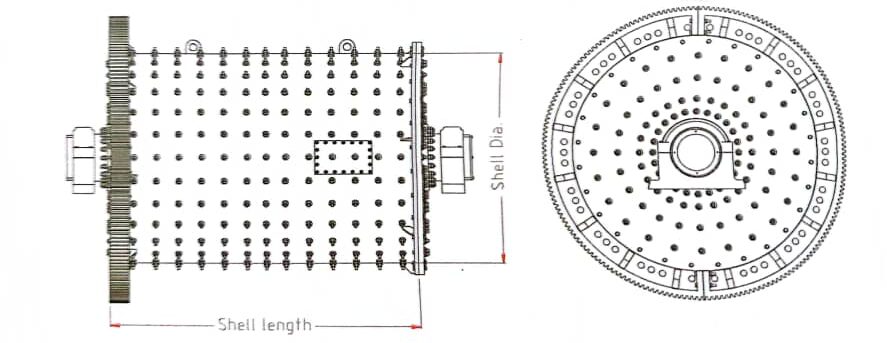
| Shell Dia. (mm) | Shell Length (mm) | Feed Size (mm) | Rotating Speed (rpm) | Production Ratio (ton/hr) | Motor Power (kW) | TYPE |
| 1800 | 3000–6000 | ≤25 | 24 | 4–15 | 75–200 | ABM18 |
| 2000 | 3000–8000 | ≤25 | 23 | 6–20 | 132-400 | ABM20 |
| 2400 | 3000–8000 | ≤25 | 21 | 8.5–25 | 200-450 | ABM24 |
| 2800 | 3500–8000 | ≤25 | 20 | 10–35 | 315-600 | ABM28 |
| 3000 | 3500–8000 | ≤25 | 19 | 12–40 | 400-800 | ABM32 |
| 3600 | 4000–8000 | ≤25 | 17 | 15–50 | 600-1300 | ABM36 |
| 4000 | 4500–8000 | ≤25 | 16 | 18–60 | 1000-1600 | ABM40 |
Ball Mill Price at Avangard Holding
Avangard Holding, as one of the pioneers in the production and supply of ball mills, offers high-quality ball mills in various types and specifications.
For accurate pricing and expert consultation, please contact the Avangard sales team.
Note: Prices are currently being updated.
For the latest price inquiry, please contact the Avangard Sales Department.
| No. | Description | Price (Toman) |
|---|---|---|
| 1 | Price of Ball Mill Machine | Contact Us |


Reviews
There are no reviews yet.